1979 – 2023: Anam Votes, Others Represent: Decades of Denial, Injustice In Ukanafun/Oruk Anam Federal Constituency

By Dominic Akpan
In plural societies where representation in the parliament is not merely a constitutional requirement, but a sensitive political and social instrument, the question of which zone gets to produce the next member for Ukanafun/Oruk Anam Federal Constituency goes beyond an individual.
It touches on history, inclusion, and the collective identity of a people. In such contexts, the sustained exclusion of Anam political bloc from representation in the House of Representatives since the inception of parliamentary history from the time of multiple representation to the current structure of Ukanafun/Oruk Anam Federal Constituency raises fundamental concerns that cannot be ignored without long-term consequences.
COMPOSITION OF UKANAFUN/ORUK ANAM FEDERAL CONSTITUENCY
The federal constituency is made up of two local government areas; Ukanafun and Oruk Anam. Each local government area is further divided into two well-defined political blocs.
It is on record that Ukanafun Local Government Area is not a political jungle where anything goes. It is clearly structured, deliberately organized, and politically conscious. The Local Government is divided into UKANAFUN and AFAHA to manage and share power between these blocs.
This principle was not adopted casually. It was embraced to guarantee fairness, inclusion, and peace. More importantly, it has been enforced, defended, and respected over the years, right up to the present day.
Let it be stated clearly and without ambiguity that the rotation principle is sacrosanct. It is not negotiable, it is not subject to manipulation, and it cannot be discarded to satisfy the greed or ambition of a few. This principle has guided the sharing of political offices at all levels, including representation in the House of Representatives whenever it is Ukanafun Local Government Area’s turn to produce a federal lawmaker.
Similarly, Oruk Anam Local Government Area is made up of two recognised political blocs: ORUK and ANAM And just like Ukanafun, there is a clear, and deliberate understanding among the politicians in the area that power must be managed, shared, and rotated between these two blocs—at least for elective offices that are strictly – the preserve of Oruk Anam.
But here lies the bitter injustice that can no longer be glossed over.
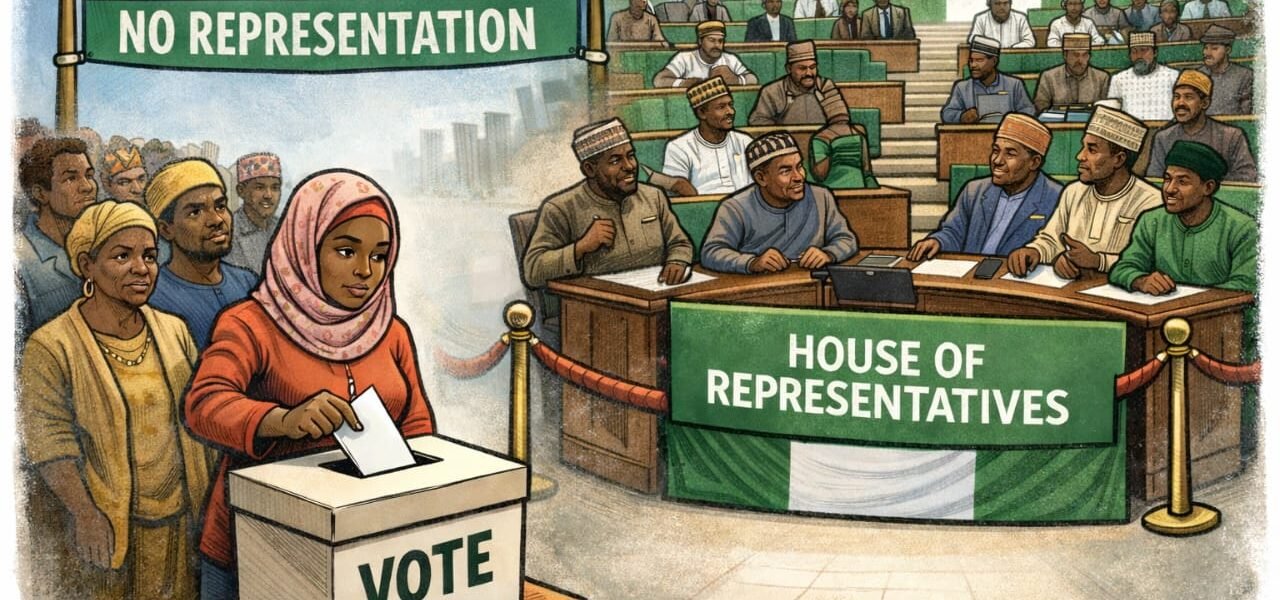
Since inception of representation in the House of Representatives, not a single person from the Anam bloc has ever been elected. Not one.
HISTORY OF REPRESENTATION IN THE HOUSE OF REPRESENTATIVES SINCE 1979
What is today known as the Ukanafun/Oruk Anam Federal Constituency emerged in 1999 from the merger of two previously distinct constituencies—Ukanafun Federal Constituency I and Ukanafun Federal Constituency II. Both constituencies had existed independently during the Second and Third Republics.
In the Second Republic, Late Sen. Akaninyene Ukpanah, who was from Ukanafun Local Area represented Ukanafun Federal Constituency 1, while Late Rt. Hon. Dan Eshiet represented Ukanafun Federal Constituency 11. As at that time, what is today known as Oruk Anam was in Ukanafun Local Government Area. Late Eshiet was from Ikot Okoro, Oruk, in today’s Oruk Anam Local Government Area.
Both lawmakers were returned for the second term in 1983, before the military struck to bring an end to civilian rule the same year.
During the Third Republic (1992), Late Chief Sunday J. Inana represented Ukanafun Federal Constituency 1, while Rt.Hon. Sunny Udom represented Ukanafun Federal Constituency 11. He is from Oruk bloc. Before the Third Republic, Oruk Anam had been carved out from Ukanafun Local Government Area. Late Inana was from Ukanafun, while Hon. Udom is from Oruk Anam.
From 1999 (Fourth Republic) Ukanafun Local Government Area has done four terms in Obong Eno Akpan (1999 to 2003),
Hon. Sabbath Obot ( 2007 to 2011)
Rt. Hon. Unyime Idem ( 2019 to 2027).
On the other hand, while Oruk Anam has done three terms in Hon. Ubong Etiebet (2003 to 2007), Rt. Hon. Emmanuel Ukoette (2011 to 2019). Etiebet and Ukoette are from Oruk political bloc of Oruk Anam.
AS 2027 APPROACHES
From above history of representation, it is clear that no Anam person has ever been given the opportunity to serve in the House of Representatives.
How can this be justified?
How long should a people remain politically invisible in their own local government?
Is Anam only good enough to vote, mobilise, and make sacrifices, but never good enough to represent?
Are the people of Anam second-class citizens in Oruk Anam, condemned permanently to the back seat of history in the federal constituency?
If rotation is a principle, why is it applied selectively?
If equity matters, why has Anam been completely shut out for decades?
If Oruk Anam truly stands for fairness and balance, why has Anam borne only exclusion and silence?
This is not oversight; this is a systemic political denial.
This is not coincidence; this is sustained injustice.
A political arrangement that continually favours one bloc, while permanently excluding the other is a recipe for bitterness, division, and instability.
The question before Oruk Anam today as we negotiate the 2027 corner is simple, but unavoidable:
Will equity finally prevail, or will Anam continue to be deliberately sidelined?
If power truly belongs to the people, then now is the time to right this historic wrong.
Anything short of that is a loud declaration that Anam does not matter—and that is a message Oruk Anam cannot afford to send.