

…an Investigative Report on External Dominance and the Struggle for Local Control
By Godwin Jarkwa
Akwa Ibom is famous for its oil palm plantations, its rich riverine dry fisheries and the smoky aroma of Oron crayfish that defines kitchens across Nigeria. But a closer look at the state’s commodity markets reveals an uncomfortable truth: while locals do the farming, fishing and processing, outsiders dominate the trade, dictating prices and controlling supply chains, leaving the locals poorer.
*The Bulk Purchase Agency’s Promise*
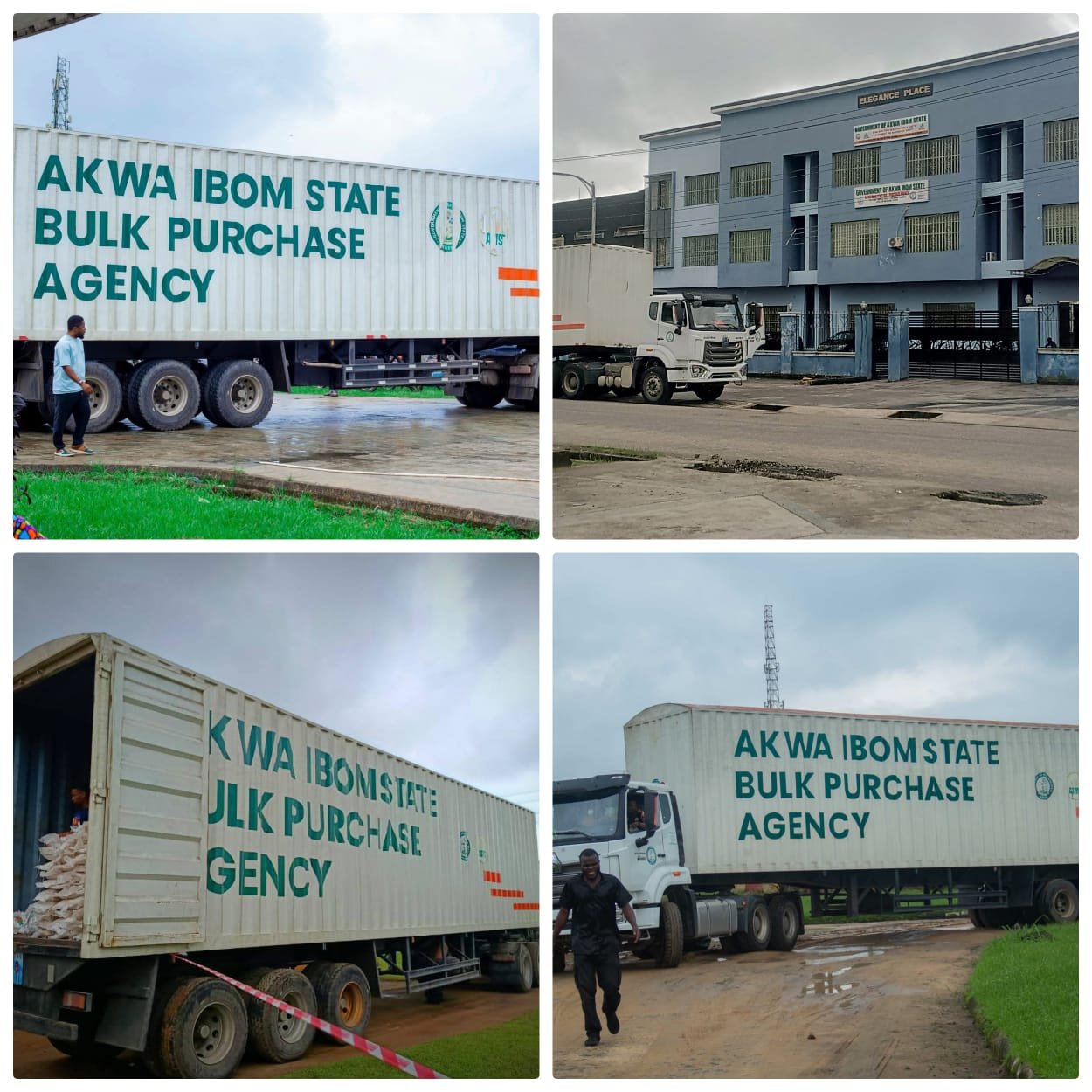
When Governor Umo Eno launched the Akwa Ibom Bulk Purchase Agency (AKBPA) in March 2024, it was a lifeline against rising hunger. Through the ARISE Food Security Programme, the agency has distributed rice, beans, garri and other staples across all 31 local government areas. By August 2025, trucks were still pulling up at local government secretariats, handing out supplies that helped the elderly, disabled and poor families survive food inflation. For instance, the third phase, which kicked off in August 2025, targeted wards in areas like Oron, Urue Offong/Oruko, Ukanafun and Oruk Anam, with trucks delivering supplies directly to local government secretariats for efficient handover. Beneficiaries, often identified through a state social register and ward personal assistants, receive vouchers or direct allocations, ensuring aid reaches the elderly, disabled and economically disadvantaged. But while the agency’s effort is visible and commendable, a bigger battle brews in the markets over who controls the very commodities that Akwa Ibom is best known for.
*A Market Under Siege*
Palm oil, crayfish and dry fish are the backbone of Akwa Ibom’s local economy. The state produces some of Nigeria’s finest palm oil with smallholders and cooperatives in Abak, Etinan, and Oruk Anam supplying both local kitchens and regional buyers. Its crayfish and fish markets in Oron, Ibaka and Ibeno are renowned as the “best quality” in Nigeria with women traders drying, smoking and bagging seafood that ends up in Lagos, Kano, and even Cameroon.
Yet, despite this local abundance, the power in these markets often lies with external players. Traders from the North, South-East and neighbouring countries like Cameroon arrive with cash in bulk. They scoop up crayfish by the truckload, buy gallons of palm oil directly from farmers and export fish in quantities that dwarf what locals can manage, affecting profitability for local sellers. Often times, bulk deal by non-indigenes or international buyers cause price-setting power shift from Akwa Ibom producers, undermining local control and food security. This has led to local producers receiving lower prices as external buyers negotiate aggressively to bypass local intermediaries.
Markets such as Ibaka, Oron and Ishiet attract buyers from across Nigeria. At Atabong market, once the pride of Oron, local patronage has thinned. Fisherwomen, pressed by urgent needs, sell to outsiders at depressed prices to get immediate cash and return to waterside to continue labour. Bags of crayfish, that leave Akwa Ibom at ₦75,000, and dry, fish varying from ₦29,000 to ₦35,000 per size, are later resold at four or five times the price in Northern markets and fetch premium rates abroad. While production is largely local, handled by indigenous farmers, fishers and women processors, the purchasing and export side shows clear external dominance.
*Broken Local Systems*
Historically, Akwa Ibom State stands out as a key producer of high quality palm oil, crayfish and dry fish, leveraging its vast oil palm plantations, riverine communities and Atlantic coastline. The state’s export strategy highlights its potentialities to contribute significantly to Nigeria’s non-oil economy with palm oil alone positioned as a major growth driver although we also produce high-quality coconut oil and palm kernel lil. Crayfish and dry fish, sourced from areas like Oron and Ibaka, are staples in Nigerian cuisine and enjoy high demand nationwide and beyond.
However, market unions were blamed for hoarding and inflating food prices. In 2024, the state government dissolved some of these unions to break their monopoly. This move was part of broader efforts to support programmes like the Bulk Food Purchase initiative. But disbandment has not solved the deeper issues: capital flight and external dominance. Local traders simply lack the cash power to compete.
“The buyers from outside come with millions to waterside to buy in bulk and transport the produce to Oron to determine the price. Our women cannot match that,” one Oron market woman told me. Her words echo across fishing towns where our women, who do most of the processing, remain the most vulnerable to market capture. The outcome defies logic as Akwa Ibom produces, outsiders profit.
*What the State Can Do*
The Akwa Ibom Bulk Purchase Agency, with its existing mandate, is well placed to intervene. Experts in bulk market suggest the following strategies:
Local Sourcing Mandate: Require 70–80% of bulk purchases to come directly from local farmers and fishers, especially through cooperatives.
Direct Investments: Establish a dedicated “Seafood Security Fund” and “Palm Oil Funds” to buy palm oil crayfish and fish in bulk at fair, guaranteed prices, outbidding external buyers.
Value Addition: Support community-based processing hubs for smoke/solar-dried fish, vacuum-packed crayfish and NAFDAC certified refined palm oil that meet national and export standards.
Market Intelligence: Build digital platforms for real-time price monitoring, linking local producers directly to verified buyers.
Fair Trade Regulation: Enforce anti-price pegging laws and license large-scale buyers to prevent predatory practices.
The state also needs to invest in storage and logistics, warehouses, refrigerated trucks and port facilities to give local traders leverage over their products instead of distress sales to outsiders.
*The Bigger Picture*
Akwa Ibom has always been more than oil wells. Its palm oil, crayfish and dry fish are as much national assets as crude oil. But unless deliberate steps are taken to reclaim control from external buyers, the state will continue to lose economic value while its women and smallholders bear the brunt of poverty.
The Bulk Purchase Agency has shown what is possible with rice and garri. Extending this strategy to palm oil, crayfish and fish could be the boldest move yet to ensure that Akwa Ibom’s wealth benefits Akwa Ibom people first.