
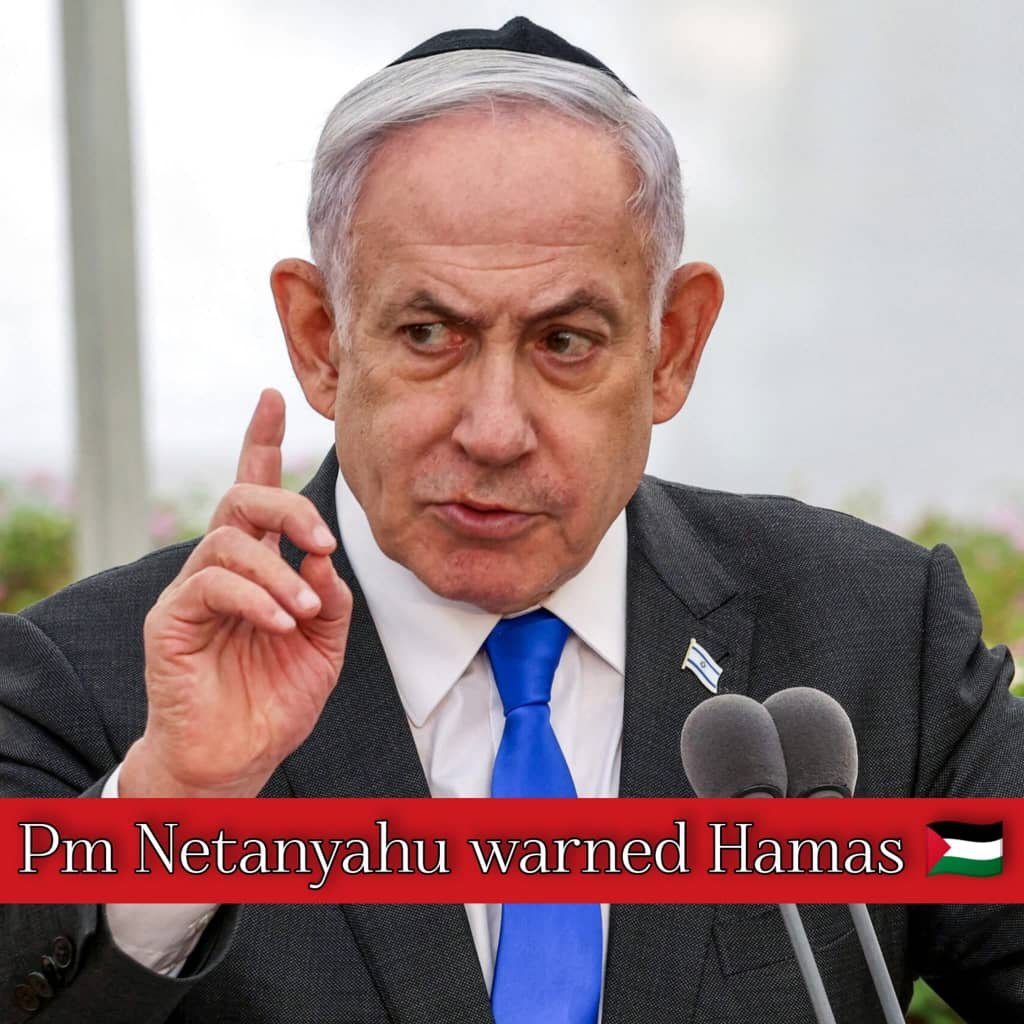
Prime Minister Benjamin Netanyahu on Saturday sent an uncompromising ultimatum to Hamas and other militant actors in Gaza.
He said, “if the deadline set by U.S. President Donald Trump for the release of hostages is not met, Israel will return to full military operations, and will do so “with full backing from all involved countries.”
Netanyahu’s warning came as intensifying diplomacy led publicly by the United States appeared to have opened a narrow path toward a ceasefire, and an exchange that could see hostages freed in the coming days.
Israeli delegations, according to Jerusalem Post monitored in Uyo revealed were reported to have been en route to Cairo to finalize technical details of a U.S. drafted plan that envisions a phased Israeli withdrawal tied to the immediate release of captives.
But Prime Minister Netanyahu also made clear that, any failure to meet the timetable would be treated as a repudiation of diplomacy and would trigger a return to offensive operations.
“Israel will not allow our people to be held indefinitely, and we will not be bound to a schedule if that schedule is used as cover for further attacks,” Netanyahu told bereaved families and senior officials in a statement.
“If the deadline set by President Trump does not result in the release of the hostages, Israel will return to fighting with full backing from all involved countries.”
The line underlined both Jerusalem’s impatience and Washington’s central role in pressing Hamas to act.
President Trump has been publicly outspoken in recent days, issuing a firm timetable for Hamas to free hostages as a condition for implementing his multi-point framework, that he says would lead to a ceasefire, phased Israeli withdrawals, and steps to demilitarize Gaza.
U.S. officials and other international interlocutors have been shuttling between capitals in an effort to convert those outlines into binding arrangements that would see to the immediate release of hostages.
Signs of progress have been mixed as the media reports that, Hamas had signalled willingness to enter talks “with caveats,” and that limited releases of hostages could begin under close monitoring.
Still, Israeli leaders and many bereaved families remain sceptical and vigilant, as Netanyahu’s statement was aimed squarely at removing any doubt that failure to deliver would expose Gaza to renewed and intensified Israeli force.
International reaction to the ultimatum was swift. U.S. officials, while publicly encouraging diplomacy, have repeatedly underlined that they will back Israel’s security decisions.
Regional capitals participating in the talks urged calm and pressed both sides to seize a diplomatic breakthrough that could spare civilians further bloodshed but they, too, have made clear that any deal must include verifiable hostage releases and safeguards against a rapid slide back into war.
Analysts say Netanyahu’s rhetoric serves two purposes; domestically, it caters to a public exhausted by the hostage crisis and keenly intolerant of any sign of weakness.
Internationally, it places the onus on Hamas and its backers to deliver concrete action, turning a U.S. timetable into an ultimatum that, in Netanyahu’s framing, carries immediate operational consequences.
Critics warned that such public deadlines risk hardening positions and reducing the diplomatic room for manoeuvre; supporters argue they may finally force Hamas to make the concessions needed to free captives.
Humanitarian voices and rights groups cautioned that even a limited resumption of fighting would exact a severe toll on civilians in Gaza, where years of conflict have already produced catastrophic levels of displacement and infrastructure damage.
Those advocates urged negotiators and guarantors to ensure that any military contingency would be tightly constrained and that civilian protections be reinforced.
For bereaved families and the thousands of Israelis who have demanded a swift return of the abducted, Netanyahu’s hardline posture will be read as a vow: diplomacy may be given a final chance, but it will not be allowed to become a permanent freeze leaving hostages in limbo.
Whether the public ultimatum pushes Hamas to deliver or instead precipitates another round of violence will be the defining question in the hours and days ahead.
As delegations prepare to meet in Cairo and time runs short on the timetable laid out in Washington, the region braces for either a rare entry into a negotiated hostage handover or a swift return to full-scale combat.
Netanyahu’s message, blunt and unmistakable, makes clear which outcome Israel intends to pursue if the captives are not freed: force, resumed and backed by allies.