

In Nigeria’s complex national landscape, representation in major policy conversations rarely occurs by chance.
More often, it is the result of deliberate engagement, intellectual advocacy, and sustained participation in the platforms where ideas are debated and the nation’s direction is shaped.
This reality recently came into sharp focus during a major economic summit in Lagos, where policymakers, economists, and development experts gathered to deliberate on Nigeria’s economic outlook, fiscal reforms, and national growth strategies.
While the gathering featured numerous distinguished speakers and panelists from across the country, one observation stood out: the apparent absence of voices traceable to Akwa Ibom State.
For many observers, this raises a critical question about the place of Akwa Ibom in Nigeria’s national conversation: Why do Akwa Ibom people, despite their well-known professional excellence, often appear missing in the country’s most influential intellectual and policy platforms?
Across Nigeria, Akwa Ibom professionals have earned a reputation for diligence, discipline, and technical competence. From engineering and medicine to law, accounting, academia, and public administration, individuals from the state have consistently distinguished themselves.
In many institutions, they occupy crucial operational roles and contribute quietly to institutional stability and growth.
However, national narratives, especially those shaped through policy forums, research institutions, economic summits, and media discourse require a different form of engagement.
Beyond professional excellence, they demand visibility, intellectual advocacy, and active participation in spaces where national ideas are contested, refined, and translated into policy direction.
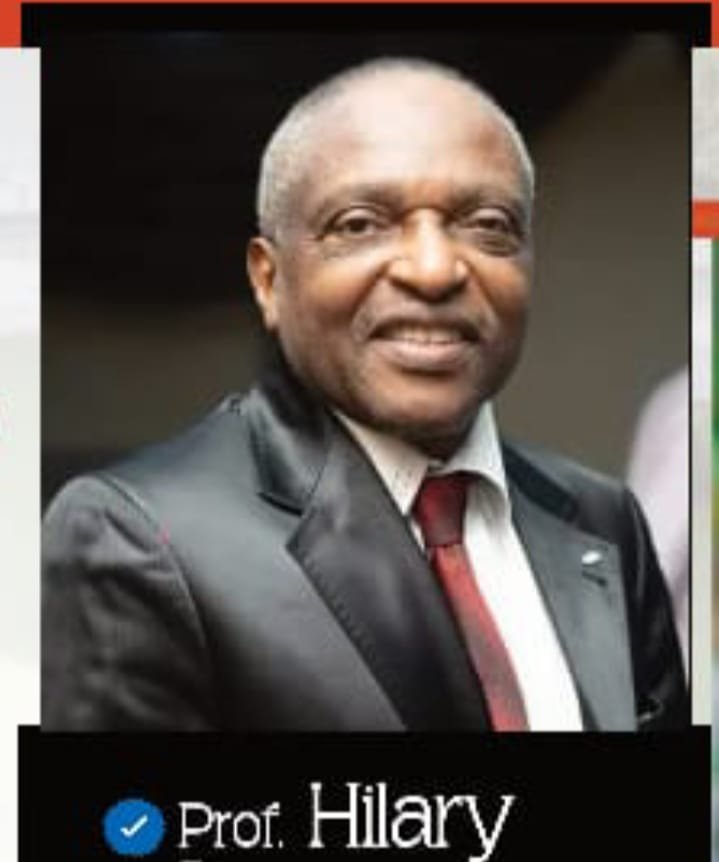
In recent years, one of the few Akwa Ibom voices consistently contributing to such conversations is the Distinguished Professor Hilary Inyang, whose engagements in public lectures, seminars, and national discussions have underscored the importance of intellectual participation in shaping Nigeria’s future.
Institutions such as the Nigerian Economic Summit Group, the Centre for the Study of the Economies of Africa, and the National Institute for Policy and Strategic Studies have become central platforms, where economic thinking and national policy directions are formulated.
Participation in these circles often determines whose perspectives are heard when key national strategies are developed.
Unfortunately, Akwa Ibom voices have historically not been strongly positioned within these influential intellectual ecosystems.
While the state has produced exceptional professionals across sectors, there has been less emphasis on cultivating visible networks of policy thinkers, economists, public intellectuals, and media commentators who consistently shape national debates.
Part of the explanation may lie in cultural orientation. Akwa Ibom society traditionally places high value on humility, modesty, and respect qualities that have shaped the character and conduct of its people.
Yet in the modern arena of national discourse, ideas must not only exist; they must also be projected, defended, and amplified. Visibility, in this context, is not vanity but strategy.
Another challenge is the limited presence of organized intellectual platforms or think-tanks dedicated to nurturing and projecting Akwa Ibom voices into national conversations.
Across Nigeria, several regional communities have developed networks that actively promote their scholars, policy analysts, and public commentators. These structures help ensure that their communities remain visible whenever the country debates its future.
Despite this reality, the situation is far from irreversible.
Akwa Ibom possesses a vast reservoir of intellectual capital, both within Nigeria and across the diaspora.
What is required is deliberate coordination and a renewed commitment to engaging the platforms where national ideas are shaped.
Young professionals from the state must be encouraged to pursue careers in economic research, public policy, governance studies, and development analytics.
Universities and academic forums within Akwa Ibom should also intensify engagement with national policy issues, fostering a culture where intellectual contributions extend beyond the classroom into national debates.
Equally important is mentorship. Established professionals and scholars must guide and support a new generation of thinkers, who will confidently represent the state in Nigeria’s policy, economic, and intellectual arenas.
Ultimately, national narratives are shaped by those who consistently show up where the conversations take place.
If Akwa Ibom is to secure its rightful place in Nigeria’s evolving story, its sons and daughters must move beyond quiet professional excellence and embrace visible intellectual leadership.
The moment may well have arrived for Akwa Ibom to step more boldly into Nigeria’s national discourse, ensuring that its ideas, perspectives, and intellectual contributions are fully represented in shaping the nation’s future.