
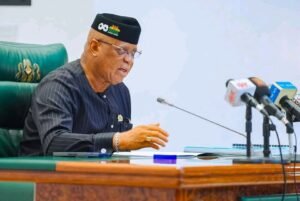
UYO – Akwa Ibom State Governor, Pastor Umo Eno, has announced far-reaching reforms in the power sector aimed at ensuring stable electricity supply, expanding access to power, and creating a viable electricity market across the state.
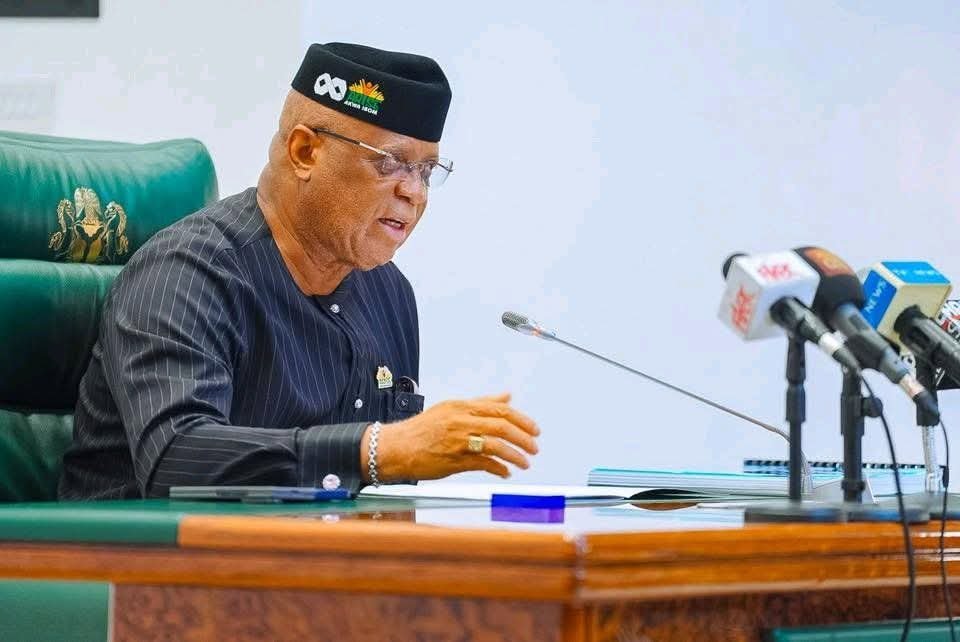
Speaking during the Akwa Ibom State Government’s Third Anniversary Media Briefing held at the Banquet Hall, Government House, Uyo, on Saturday, Governor Eno said his administration had completed critical groundwork required under the Electricity Act to position the state for greater control and regulation of its electricity sector.
The governor disclosed that the state had successfully developed and implemented the regulatory transition framework, conducted extensive stakeholder consultations, and established the Akwa Ibom State Electricity Regulatory Commission (AKSERC) to oversee the new electricity regime.
According to him, the next phase of the reform process will be the formal inauguration of the commission, whose members have already been screened and confirmed by the Akwa Ibom State House of Assembly.
“The first step was to establish the regulatory transition framework required under the Electricity Act. We developed a transition plan and carried out all necessary consultations before setting up the Akwa Ibom State Electricity Regulatory Commission,” Eno stated.
He disclosed that, the commissioners would be sworn in this June and would commence operations from their offices at Dakkada Towers, Uyo.
Governor Eno explained that one of the commission’s immediate assignments would be the comprehensive identification, valuation and documentation of all electricity assets within the state as part of plans to establish a state-owned electricity company.
He noted that every electricity asset, including transformers procured by communities, private estates and corporate organisations, falls under the regulatory framework and must be properly documented.
“Every transformer within the state, whether purchased by government, communities or private developers, is subject to regulation. Therefore, it is necessary to identify and document all electricity assets across Akwa Ibom State,” he said.
The governor further disclosed that the state had concluded extensive negotiations to secure its interests in existing electricity arrangements, a move he said would enable Akwa Ibom to participate effectively in decisions concerning its energy future, while laying the foundation for a sustainable electricity market.
To facilitate a smooth transition, Eno said consultants and technical experts had been engaged to carry out a comprehensive audit of electricity infrastructure and assets across the state.
Addressing the status of Ibom Power Company (IPC), the governor revealed that his administration inherited substantial financial liabilities, including a judgment debt exceeding $9 million and outstanding obligations to Savannah Energy for gas supplied to the power plant.
“When I assumed office, Ibom Power Company was burdened with significant obligations.
“At one point, there was a judgment debt of over nine million dollars hanging over the company, with the possibility of enforcement proceedings outside the country,” he disclosed.
He further explained that, government intervention and negotiations helped avert operational disruptions and ensured continued power generation by the company.
As part of the reforms, Governor Eno announced plans to establish a state electricity distribution company through concession and public-private partnership arrangements, stressing that government would focus on regulation rather than direct management.
“Government will not run the distribution company directly. We are exploring concession and partnership models that will allow competent operators to manage the business efficiently while government concentrates on regulation and oversight,” he said.
In a move to improve electricity access in rural and underserved communities, the governor also unveiled plans to deploy renewable energy solutions through a large-scale solar electrification programme.
He disclosed that, the initiative would target about 50,000 households across the state, particularly communities where connection to the national grid remains difficult or economically unviable.
According to him, government intends to subsidise the programme to make the solar systems affordable for beneficiaries.
“This initiative will provide electricity to thousands of homes that may otherwise have to wait many years before being connected to the national grid,” Eno said.
The governor acknowledged that many of the ongoing reforms may not be immediately visible to residents but emphasized that they are essential institutional, financial and regulatory measures designed to guarantee long-term energy security, reliable power supply and economic growth in Akwa Ibom State.
He reaffirmed his administration’s commitment to building a modern and sustainable electricity sector capable of supporting industrialisation, investment and improved quality of life for residents.