
UYO – Governor Umo Eno’s directive to the newly inaugurated Akwa Ibom State Electricity Regulatory Commission (AKSERC) to deliver regular electricity supply to residents within the next 18 months has ignited optimism across the state, while also raising critical questions about the practicality of the target amid Nigeria’s longstanding and attitudinal power sector challenges.
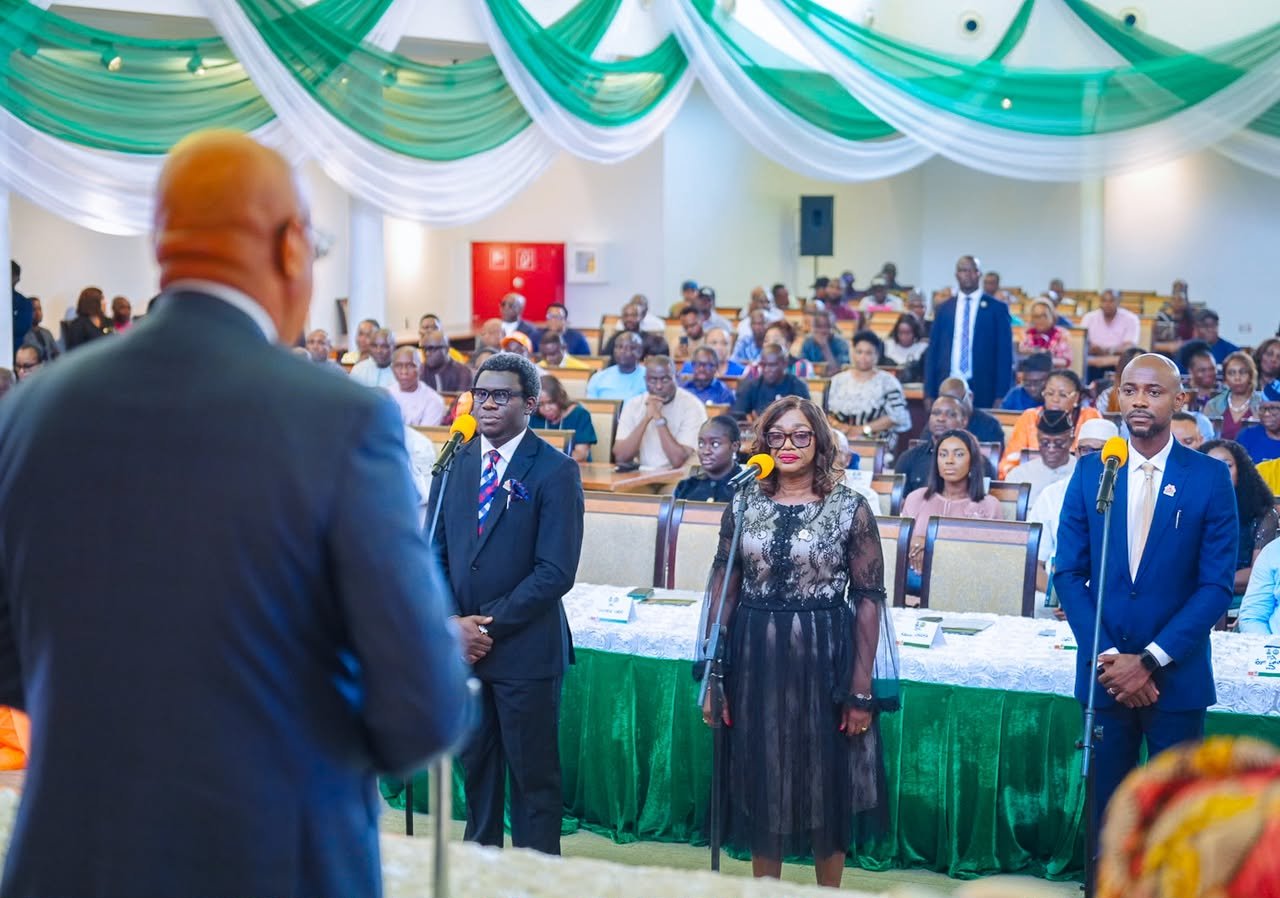
The Governor handed down the marching order during the inauguration of the five-member (AKSERC) board at the Banquet Hall of Government House, Uyo recently describing reliable electricity as a key driver of economic growth, industrial development and improved living standards.
Acknowledging the frustration of residents over persistent power shortages, Governor Eno said his administration had embarked on concrete reforms aimed at transforming the state’s electricity sector following the adoption of the Akwa Ibom Electricity Sector Reform Programme in September 2025 without any delay.
“We feel the pain our people are going through with inadequate supply of electricity, and we have taken concrete steps to address the issue,” the Governor stated at a recent media parly with journalists, expressing confidence that the state would soon overcome its electricity challenges.
At the heart of the reform agenda is AKSERC, which will serve as the sole regulator of electricity business within the state.
The Commission is expected to oversee market activities, regulate operators and consumers, attract investors and create a competitive electricity market capable of delivering reliable and affordable power.
Governor Eno further directed the Commission to engage the Port Harcourt Electricity Distribution Company (PHEDC) and other stakeholders towards establishing a state-owned electricity distribution company, while also pursuing the transfer of regulatory powers from federal authorities to the state.
The Governor’s confidence is buoyed by recent reforms introduced through the Electricity Act 2023, which grants states greater authority to participate in electricity generation, transmission and distribution.
Akwa Ibom has already established Ibom Electricity Holding Limited (IEHL) to manage electricity assets and investments and has begun processes aimed at strengthening its stake in key power sector ventures.
However, while the Governor’s target has been applauded as bold and visionary, energy experts caution that achieving uninterrupted electricity supply within 18 months may prove challenging.
Nigeria’s electricity sector continues to grapple with inadequate generation capacity, ageing transmission infrastructure, gas supply constraints, vandalism of power facilities, high technical losses and liquidity issues.
Distribution companies across the country have also faced criticism for poor service delivery, estimated billing controversies and insufficient investment in network expansion.
Industry observers note that although Akwa Ibom possesses significant advantages, including gas reserves, independent power assets and a relatively strong industrial base, transforming these resources into stable electricity supply will require substantial investment, regulatory efficiency and strong collaboration with existing power providers.
The attitude and operational limitations of electricity distribution companies remain another critical factor. Analysts argue that state-level reforms alone may not immediately eliminate challenges arising from national grid instability and transmission bottlenecks, which continue to affect electricity supply across the country.
Nonetheless, supporters of the Governor’s initiative contend that the state’s strategic investments, coupled with the autonomy granted by the Electricity Act, provide a unique opportunity for Akwa Ibom to become one of Nigeria’s leading sub-national electricity markets.
For many residents and businesses burdened by erratic power supply and rising energy costs, the success of the Commission will ultimately be measured not by policy documents or regulatory frameworks, but by visible improvements in electricity availability.
As AKSERC begins operations under the leadership of its Chairperson and Chief Executive Officer, Mrs. Arit Uya, expectations are high. Whether Governor Eno’s ambitious 18-month deadline becomes a landmark achievement or encounters the familiar obstacles that have plagued Nigeria’s power sector remains to be seen.
Governor Eno’s establishment of AKSERC is the right step towards socio-economic recovery of the state, and placing the Commission under intense public scrutiny, with millions of Akwa Ibom people eagerly awaiting a transformation that could redefine the state’s economic future.