

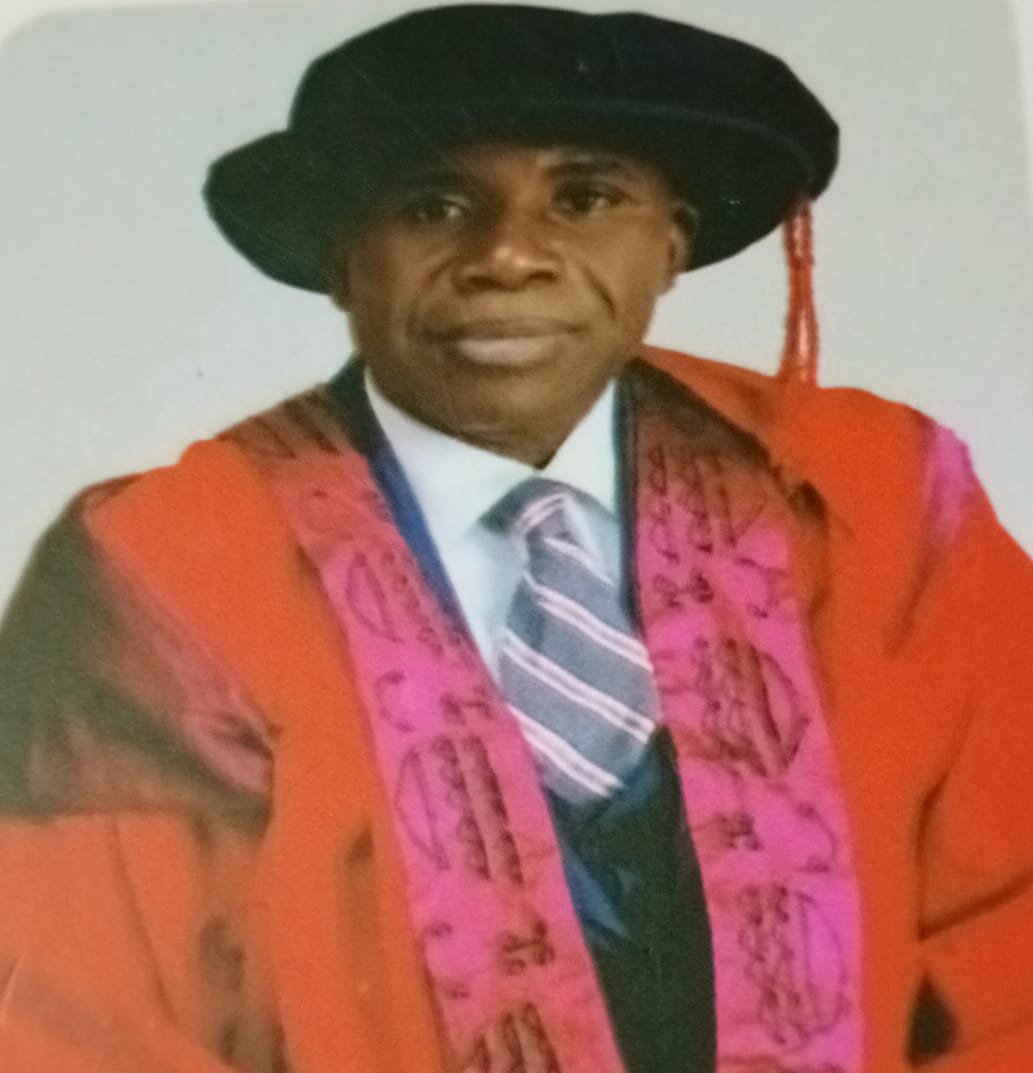
UYO – A Professor of Gastrointestinal and Urogenital Malignancies at the University of Uyo (UNIUYO), Prof. Emmanuel Kunle Abudu, has identified pathology as the cornerstone of effective cancer diagnosis, treatment and prevention, warning that Nigeria faces a growing cancer crisis fueled by late presentation, poor awareness and inadequate screening.
Prof. Abudu made the assertion while delivering the 136th Inaugural Lecture of the University of Uyo, titled “Turning Human Cells and Tissues into Answers: Pathology, the Bedrock of Cancer Care,” on Thursday.
The don, who traced over 25 years of research in cancer pathology, emphasized that human cells and tissues contain critical answers to understanding cancer development, progression and treatment, stressing that no meaningful cancer care can occur without the expertise of pathologists.
According to him, cancer remains one of the leading causes of premature deaths worldwide and is responsible for about 127,000 new cases and 80,000 deaths annually in Nigeria, lamenting that misconceptions, poverty and delayed medical attention continue to worsen outcomes.
“Cancer is real. It respects no age, gender, race or social class. Unfortunately, many still attribute it to witchcraft, marine spirits or household enemies instead of seeking medical intervention,” he stated.
The inaugural lecturer explained that pathology plays a central role in identifying diseases, classifying cancer types, predicting prognosis, guiding targeted therapy and monitoring treatment outcomes.
Describing pathologists as “medical detectives,” Prof. Abudu said the discipline studies the causes, mechanisms and physical manifestations of diseases, enabling physicians to make informed treatment decisions.
He highlighted the disturbing trend of cancers occurring at younger ages among Nigerians, particularly breast, colorectal, cervical and prostate cancers, which formed the focus of his extensive research.
The professor disclosed that studies conducted across Lagos, Sagamu, Ibadan, Uyo and international centres revealed that colorectal cancer is the most common gastrointestinal malignancy in Nigeria, with nearly one-quarter of cases occurring in people below 40 years.
On breast cancer, he noted that Nigerian women often develop the disease about a decade earlier than their Western counterparts, with many presenting at advanced stages.
He further revealed that between 49 and 62 per cent of breast cancer cases studied were triple-negative breast cancers, an aggressive subtype that responds poorly to conventional hormone therapies.
“This high burden of triple-negative breast cancer among women of African ancestry underscores the need for more molecular research and targeted therapies,” he said.
Prof. Abudu also described cervical cancer as one of the most preventable cancers, noting that nearly all cases are linked to Human Papillomavirus (HPV) infection.
Despite available vaccines and screening methods, he observed that low awareness and poor uptake of preventive services remain major challenges.
The professor called for aggressive HPV vaccination campaigns, routine cervical cancer screening and stronger public health education to curb the disease.
On prostate cancer, the leading cancer among Nigerian men, he unveiled findings from community screening programmes and research that led to the development of a locally validated PSA Density threshold, which improves the accuracy of identifying men who genuinely require biopsies.
He said the innovation could reduce unnecessary procedures while improving early cancer detection.
Prof. Abudu further lamented the shortage of diagnostic infrastructure, trained personnel and modern pathology facilities in Nigeria, urging governments at all levels to invest in immunohistochemistry, molecular diagnostics and digital pathology.
He also advocated expanded health insurance coverage for cancer diagnosis and treatment to reduce the financial burden on patients.
The inaugural lecturer recommended early screening programmes, healthy lifestyles, cancer awareness campaigns and the strengthening of pathology services as critical measures for combating the country’s growing cancer burden.
Summarizing his lecture, Prof. Abudu maintained that “Cancer is real, our cells and tissues hold the answers, and pathology remains the bedrock upon which all cancer care is built.”
He added that strengthening pathology services would significantly improve cancer diagnosis, treatment outcomes and survival rates across Nigeria.