
By Dennis Udoma
The devastating floods that recently swept through parts of Uyo metropolis and several communities across Akwa Ibom State have once again brought to the forefront the urgent need for a comprehensive review of the state’s development trajectory.
Homes were submerged, roads rendered impassable, businesses disrupted, and livelihoods threatened as torrential rains exposed weaknesses in existing drainage infrastructure and environmental management systems.
Concerned by the scale of destruction, Governor Umo Eno promptly called for concerted efforts from government agencies, environmental experts, community leaders and residents to address the menace and prevent future occurrences.
The governor’s resolve to review the state’s drainage master plan, redesign aspects of urban development, and establish environmental brigades underscores the seriousness with which his administration views the challenge.
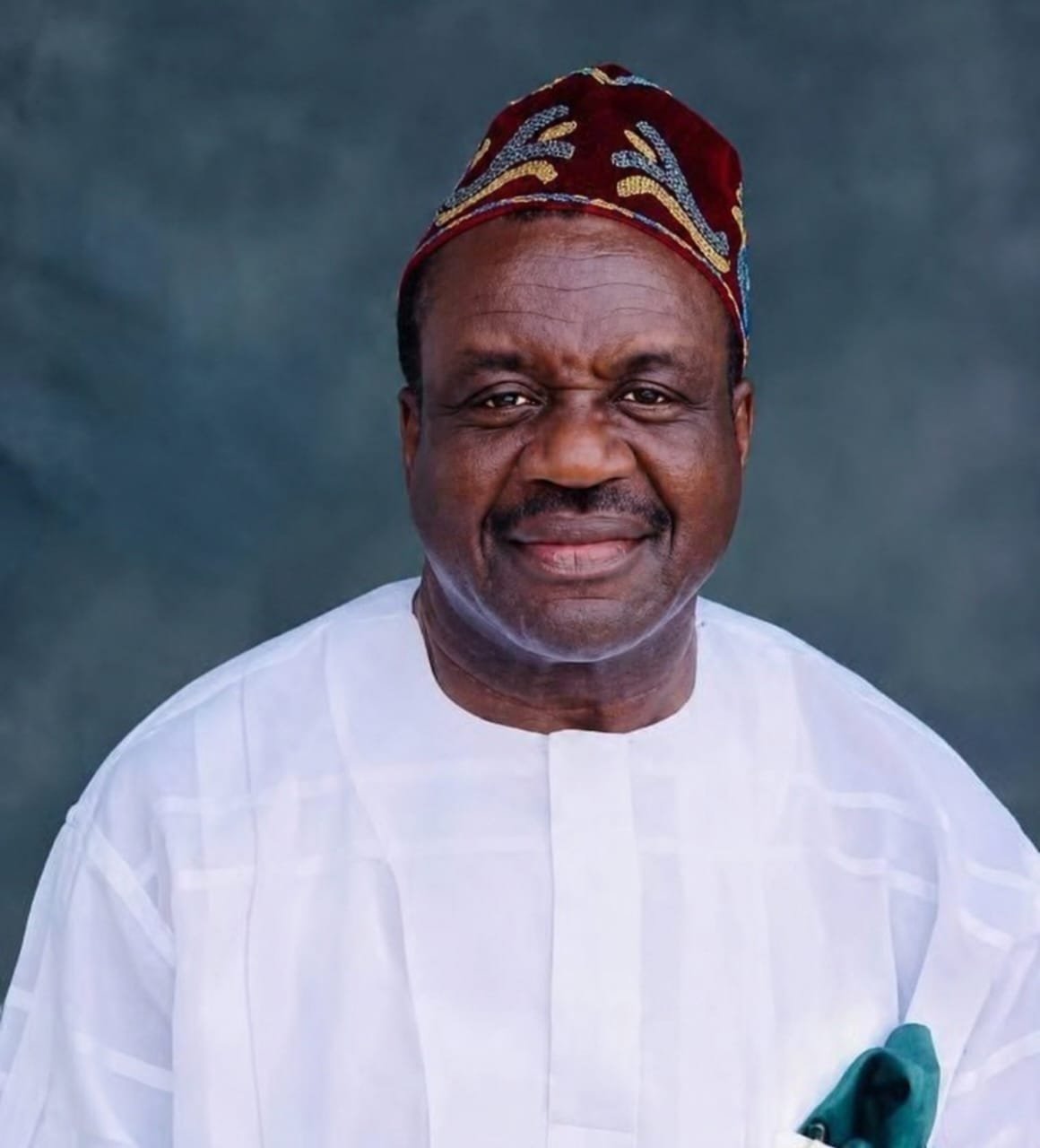
Yet, beyond immediate interventions, the flooding crisis has reignited a conversation that resonates deeply with many Akwa Ibom people; the need to revisit the foundational development philosophy that transformed Uyo from a modest provincial town into one of Nigeria’s most organized state capitals.That conversation inevitably leads to one name: Obong Victor Attah.
Many still remember Attah’s enduring development mantra, “Come, Let Us Build Akwa Ibom State Together.” It was a philosophy anchored on strategic planning, orderly urban growth, environmental consciousness and long-term sustainability.
Today, as Akwa Ibom grapples with the consequences of rapid urbanization and climate-induced environmental pressures, there is a growing argument that the state could benefit immensely from the expertise of the man widely regarded as one of the architects of modern Akwa Ibom.
The case for appointing Obong Victor Attah as a Development Consultant goes beyond politics. It is rooted in professional competence, institutional memory and practical experience.
Before his emergence as governor, Attah had already distinguished himself as an accomplished architect and development strategist. A graduate of Architecture from the Nigerian College of Arts, Science and Technology now, Amadu Bello University, Zaria, Leeds College of Art, School of Architecture, United Kingdom, Columbia University, New York, USA, where he earned a Master’s degree in Advanced Architectural Design and Planning, Kennedy School of Government, Harvard University, USA, where he undertook further studies in Governance and Public Administration etc.
He established Vatt Associates, an architectural consultancy firm that handled numerous public and private projects across Nigeria. Through his professional engagements, he acquired extensive knowledge in urban planning, environmental design, drainage systems, land-use management and sustainable infrastructure development.
Those professional credentials became evident during his tenure as governor between 1999 and 2007, under whose leadership, Uyo witnessed unprecedented physical transformation driven by a carefully conceived master plan. Broad road networks, organized residential layouts, beautification projects (tree planting on major roads), public infrastructure and environmental management initiatives became defining features of the state’s capital city.
Perhaps more importantly, Attah’s administration laid the planning framework upon which successive governments have continued to build. The orderly growth of Uyo did not happen by accident; it was the product of deliberate design and a long-term vision.
However, two decades later, the realities confronting Akwa Ibom now have changed significantly. Population growth has accelerated; housing developments have expanded into previously undeveloped areas; commercial activities have intensified; climate change has increased the frequency and intensity of rainfall. In some instances, natural waterways and drainage corridors have come under pressure from unchecked development.
The result is increasingly evident whenever heavy rains occur.
The recent floods should therefore serve as a wake-up call, not merely for emergency response but for strategic reassessment.
It is an opportunity for policymakers to revisit the state’s original master plan, evaluate its implementation and determine how contemporary realities can be aligned with sustainable development principles.
This is where Attah’s expertise becomes particularly relevant.
As someone who participated directly in the conception and implementation of Akwa Ibom’s development blueprint, he possesses invaluable historical and technical insight into the state’s physical planning architecture.
His knowledge could support government efforts in reviewing drainage systems, strengthening urban renewal programmes, enforcing planning regulations, protecting natural flood channels and integrating climate resilience into future infrastructure projects.
Across the world, governments routinely engage retired leaders, technocrats and professionals whose expertise remains relevant to emerging challenges. Such appointments are not exercises in nostalgia; they are strategic decisions aimed at leveraging experience for public good. Akwa Ibom stands to benefit from a similar approach.
Governor Umo Eno has demonstrated commendable concern for the welfare of citizens affected by flooding and has already outlined measures aimed at addressing the menace. Bringing experienced professionals like Obong Victor Attah into the conversation could further enrich policy formulation and provide valuable guidance in implementing long-term solutions.
The state has earned a reputation as one of Nigeria’s fastest-growing economies. Sustaining that growth, however, requires more than physical expansion. It demands continuous planning review, environmental responsibility and adherence to sound development principles.
The floods that recently ravaged parts of Akwa Ibom have delivered a clear message: development must keep pace with environmental realities. Cities of the future cannot be built solely on concrete and asphalt; they must be designed to withstand the pressures of climate change, population growth and evolving urban demands.
As Akwa Ibom charts its next phase of development, it would be prudent to draw upon every available reservoir of knowledge and experience. Obong Victor Attah represents one such reservoir; a blend of architectural expertise, urban planning knowledge and practical governance experience that remains relevant in addressing today’s challenges.
The need for a Development Consultant in the mould of Victor Attah is therefore not merely a matter of honouring the past. It is about securing the future.
If Akwa Ibom is to build resilient communities, sustainable cities and environmentally responsible infrastructure capable of withstanding future challenges, then the wisdom that shaped its early transformation should not be ignored.
In confronting the realities exposed by recent floods, the state may find that one of its greatest assets lies in the experience of a man who helped design the foundation upon which modern Akwa Ibom stands.
The VIEWPOINT, is written by Dennis Udoma, a prolific writer and frontline journalist based in Uyo, Akwa Ibom State.