
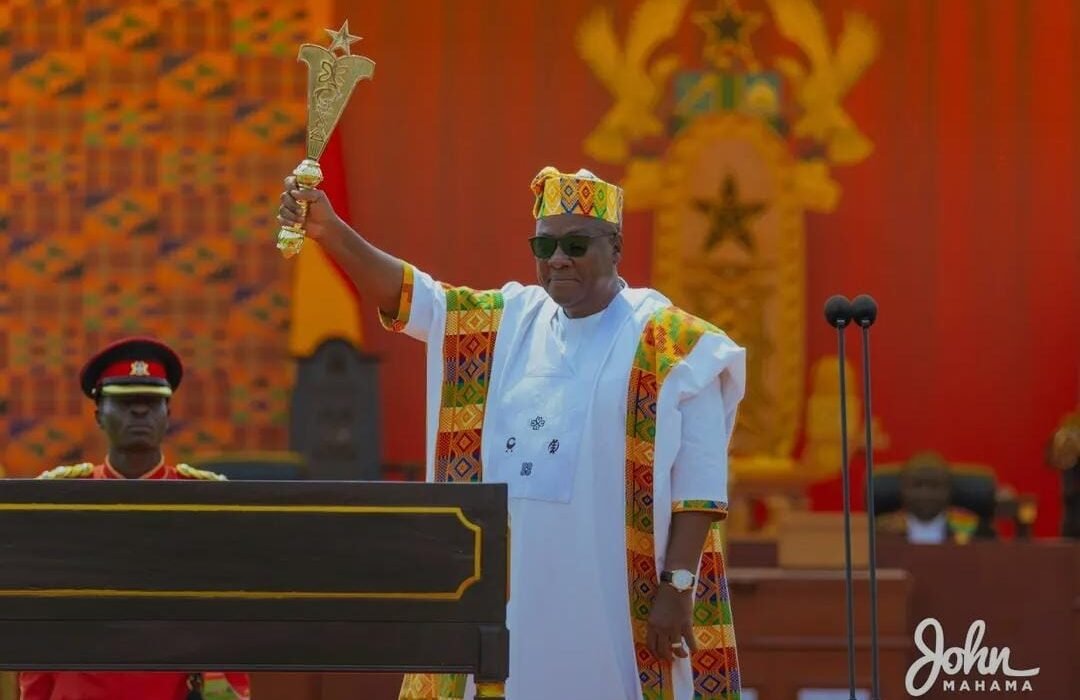
Ghana has turned down a proposed health compact from the United States government, with President John Dramani Mahama describing the terms attached to the deal as humiliating and unacceptable.
President Mahama disclosed the details of the rejected agreement during an engagement at the Council on Foreign Relations (CFR) in New York on Friday, September 25, on the sidelines of the 81st United Nations General Assembly.
According to the Ghanaian leader, the proposed compact was intended to replace health funding previously provided through the United States Agency for International Development (USAID) after the agency was dismantled.
He explained that the deal, valued at about $109 million over five years, was part of the Trump administration’s “America First Global Health Strategy” aimed at shifting US health assistance to bilateral agreements.
Mahama said the proposal was first reviewed by Ghana’s Ministry of Health, which prepared an Information Paper and presented it to Cabinet for consideration.
Upon review, the Ministry flagged several provisions it considered a threat to national sovereignty, public safety and health governance.
One of the major concerns, according to the President, was a clause requiring Ghana to hand over its pathogen profile to the United States.
He said the profile would entail detailed mapping of diseases and infectious organisms endemic to the country, which Ghana considered sensitive biological data.
Another troubling provision, he noted, was a demand for Ghana to surrender its national medical records to Washington.
“It states that we shall give the United States our pathogen profile. It also says we should give our medical records. I mean, who takes another country’s medical records?” Mahama queried.
The President also faulted a condition that would have stripped Ghana’s Food and Drugs Authority (FDA) of its regulatory powers.
He disclosed that the compact stipulated that any medications or medical products brought into Ghana under the programme would not be subject to inspection by the FDA.
“It was humiliating,” Mahama said, adding that he had never seen a document rejected so quickly by his Cabinet.
“I’ve never seen anything thrown out as fast as that. And so, of course, we rejected it,” the President stated.
He further revealed that the agreement also required Ghana to provide counterpart funding, committing a fixed amount of its own resources to the programme.
Following the review, Cabinet rejected the compact in what Mahama described as record time.
He said the Minister of Health was subsequently directed to inform the US Ambassador to Ghana that the country would not proceed with the arrangement.
“We asked the health minister to inform the US ambassador that we didn’t need it, we’ll manage ourselves,” Mahama said.
The Ghanaian leader noted that the withdrawal of US aid had created a $74 million gap in Ghana’s health budget, affecting medical research, laboratory services, HIV testing and supply of antiretroviral drugs.
He, however, said the setback had spurred his government’s ‘Accra Reset’ initiative, which seeks to reduce dependence on foreign health aid and boost local production of medicines and vaccines.
Ghana is not the only African country to have raised concerns over the new US health compact template, as reports indicate similar deals faced resistance in Zimbabwe and Kenya, while Zambia reportedly halted a $320 million mineral-linked aid package.
Observers say Ghana’s decision has reignited debate across Africa on the balance between foreign health assistance and national control over sensitive health data and regulatory institutions.
Public health experts in Ghana have commended the government for standing firm, insisting that access to pathogen data and medical records must remain under national custody for security reasons.
Meanwhile, many Ghanaians on social media have praised President Mahama’s stance, describing it as a bold step towards protecting the country’s sovereignty and dignity in international partnerships.