

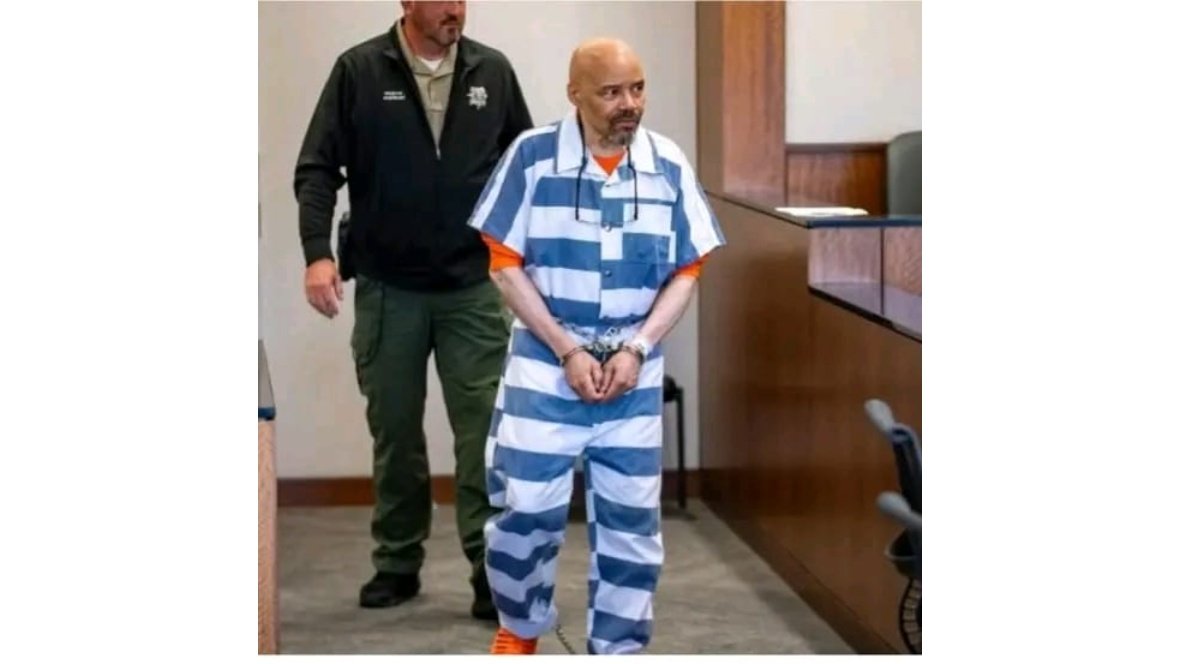
A 71-year-old American man who spent more than four decades on death row has finally regained his freedom after fresh scientific evidence showed he was not connected to the crime for which he was condemned. The dramatic order for his release on bail was handed down by a judge in the State of Utah, bringing a major twist to one of the longest and most controversial capital punishment cases in the history of the state. The development has sparked renewed public debate in the United States over the use of the death penalty, the reliability of confessional statements, and the dangers of wrongful conviction.
The man at the centre of the case is Douglas Stewart Carter, who was sentenced to death in 1985 after a jury found him guilty of the brutal murder of Eva Olesen, an elderly woman in Provo City. At the time of the killing, Olesen was widely known to be an aunt to the then Chief of Police in Provo, a fact that drew enormous public attention and pressure on investigators to secure a quick conviction. Carter, who was arrested shortly after the incident, was tried and convicted in the same year, with the court handing down the maximum punishment of death by execution.
For more than 40 years, Carter remained in custody on death row while his lawyers fought to prove his innocence through various appeals and legal applications. Throughout the period, he consistently maintained that he did not kill Eva Olesen and insisted that he was a victim of a flawed and biased criminal justice system. His case suffered several setbacks in the courts until new scientific findings eventually gave his defence team a strong ground to demand a retrial.
The turning point in the long-running legal battle came when prosecutors recently disclosed that newly analysed DNA evidence recovered from the crime scene did not match Douglas Stewart Carter. According to documents presented before the court, forensic experts subjected old samples to advanced DNA testing technology that was not available in 1985, and the results completely excluded Carter as the source. The disclosure fundamentally weakened the foundation upon which the original conviction was secured and forced the court to reconsider his continued detention.
Following the revelation, the defence team filed an application for bail, arguing that it would amount to grave injustice to keep Carter behind bars when scientific evidence had cleared him. The presiding judge agreed with the argument and ordered that he be released on bail pending the determination of his retrial and other associated legal proceedings. The order was met with mixed reactions, with human rights groups welcoming it as long overdue justice, while some members of the victim’s family expressed shock.
The bail order did not come as a surprise to legal observers who had been following the case closely since last year when the Utah Supreme Court ordered a fresh trial for Carter. In its landmark judgment last year, the Supreme Court of Utah held that there was clear evidence of misconduct by investigators who handled the 1985 murder case. The court ruled that the investigators compromised the integrity of the investigation through improper handling of evidence and coercive interrogation methods.
Central to the Supreme Court’s decision was the issue of Carter’s confessional statement, which formed the main pillar of the prosecution’s case in 1985. Carter has always maintained that the signed confession was not voluntary, claiming that it was obtained after prolonged interrogation, intimidation and coercion by detectives. The Supreme Court agreed that the circumstances surrounding the confession raised serious questions about its voluntariness and admissibility.
In addition to the confession, court records showed that there was no physical or forensic evidence linking Carter directly to the murder scene. No fingerprints, blood samples, hair strands or weapon was ever traced to him, a fact that his lawyers have repeatedly highlighted over the years. Despite this glaring lack of scientific evidence, the jury in 1985 still went ahead to convict him.
The jury’s decision at the time was largely based on two pieces of evidence, which have now been called into question. The first was the disputed confession which Carter later retracted, and the second was the testimony of two witnesses who claimed that Carter had bragged to them about killing Eva Olesen. The credibility of those witnesses has since been challenged, with defence lawyers arguing that their statements were inconsistent and motivated by personal benefits offered by investigators.
The racial dimension of the case has also continued to attract attention from civil rights activists and legal scholars in America. Carter, who is a Black man, was convicted for the murder of a White woman in a predominantly White community at a time when racial tensions were high in Utah. Activists have argued that his race played a significant role in the speed and manner in which he was convicted, pointing to historical patterns of racial bias in capital cases.
Speaking after the court granted him bail, Carter’s lead defence attorney, Neal Hamilton, said his client was overwhelmed with emotion but also deeply traumatised by his long years in incarceration. Hamilton disclosed that arrangements have been made to place Carter in an extended-stay accommodation facility close to the family of his son. He explained that Carter’s son was given up for adoption as an infant and grew up with another family, only learning about his biological father’s death row conviction several years later.
According to the defence attorney, the proximity to his son’s family is intended to help Carter gradually reintegrate into normal society after spending almost his entire adult life in prison. He noted that life outside the prison walls will be extremely difficult for Carter, who entered death row as a young man and is now coming out as an elderly man of 71 with no job, no home and no social life. The family, he said, has agreed to support him through the difficult transition period.
Hamilton further stressed that Carter will need comprehensive medical care, psychological therapy and counselling to deal with the severe mental and emotional damage caused by his prolonged stay on death row. He explained that 41 years of living under the constant threat of execution has left deep scars that cannot be erased overnight. The lawyer said the state must take responsibility for the trauma inflicted on his client through a wrongful conviction.
In his words, “It’s not just as simple as, ‘Let’s let him go.’ He’s being released with 41 years of state-induced trauma and the effect it will have on him is very real.” Hamilton said his legal team will now focus on ensuring that Carter gets a complete exoneration and adequate compensation for the years he lost. He added that they will also push for the real perpetrator of the 1985 killing to be identified and brought to justice.
The case of Douglas Stewart Carter has once again reignited the national conversation in the United States about the future of the death penalty and the need for reforms in the criminal justice system. Legal experts have argued that if advanced DNA testing had been available in 1985, Carter may never have spent a single day on death row. Human rights organisations have called on the government to review all death penalty convictions that were secured without solid forensic evidence to avoid similar cases of injustice.