
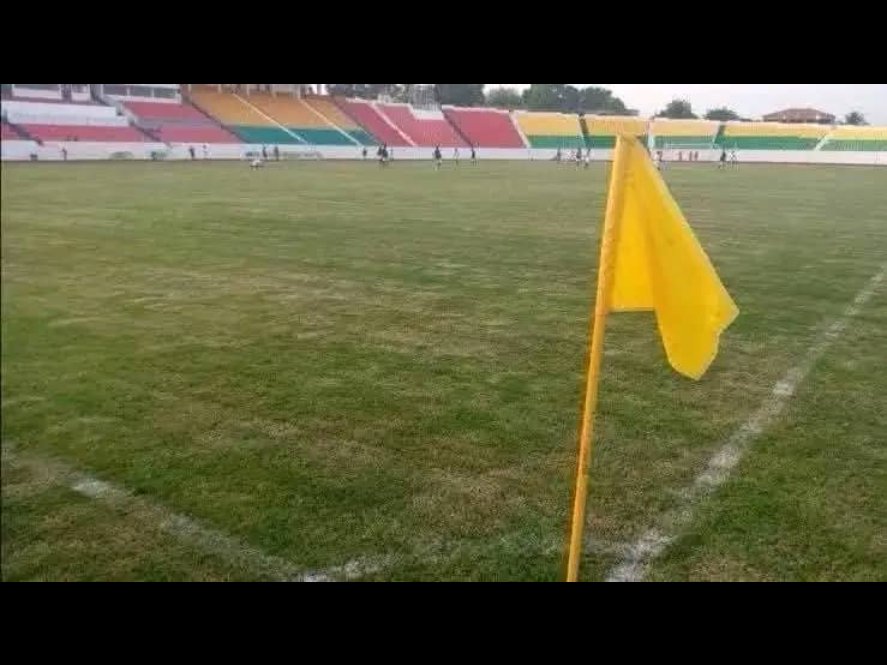
The Confederation of African Football, CAF, has tendered an apology to the Nigeria Football Federation, NFF, over the poor state of the pitch used for Nigeria’s Africa Cup of Nations, AFCON, 2027 qualifier against Guinea-Bissau, which ended in a 3-0 defeat for the Super Eagles.
The continental football body has also reportedly banned the Estádio Nacional 24 de Setembro in Bissau from hosting further matches in the ongoing qualifying series, following complaints about the terrible condition of the playing surface.
According to a report by OwnGoalNigeria, CAF took the decision after receiving complaints and reviewing reports about the pitch that hosted the Group L encounter between Nigeria and Guinea-Bissau on September 29, 2026.
Nigeria suffered a shocking 3-0 loss in that game, which was their first defeat in Group L of the qualifiers, with Guinea-Bissau’s Franculino Djú, Mama Baldé and Álvaro Djaló all finding the back of the net to secure victory for the hosts.
The poor condition of the pitch was noticed even before the match kicked off, with players and officials from both sides expressing concerns about the bumpy, uneven and dry surface that made free flow of football difficult.
Super Eagles head coach, Éric Chelle, had also complained about the state of the playing surface after Nigeria’s official training session at the stadium a day before the match, warning that it could affect the quality of the game.
Reports from the Nigerian camp indicated that officials were worried about possible injuries to players due to the bad pitch and had to advise the players to be extra careful and consider their safety during the encounter.
The situation was said to be so bad that even Guinea-Bissau officials and players were reportedly not comfortable with the condition of their own home pitch, as it posed a danger to all the players on the field.
Following the outcry, CAF has now reportedly communicated to the NFF that the pitch was not in the same poor condition when the stadium was inspected and approved to host international matches for the qualifying campaign.
It was gathered that the Estádio Nacional 24 de Setembro had previously been banned from hosting international matches because of structural and facility problems, which forced Guinea-Bissau to play their home games outside the country.
After some renovation works were carried out on the stadium, CAF inspected and cleared the venue to host matches again, but the pitch reportedly deteriorated badly before Nigeria’s visit, leading to the current controversy.
The reported ban by CAF now means that Guinea-Bissau will have to look for another CAF-approved stadium outside Bissau to host their remaining home matches in the 2027 AFCON qualifiers, which will be an added cost to their football federation.
Despite the poor pitch and the apology from CAF, Super Eagles coach Éric Chelle has refused to use the state of the playing surface as an excuse for his team’s heavy defeat in Bissau.
The Franco-Malian tactician accepted full responsibility for the result, admitting that his team was not at their best and that Guinea-Bissau deserved their victory because they were the better side on the day and took their chances.
Chelle said his players failed to execute his game plan and were punished for their mistakes, insisting that a good team should be able to play on any surface and that the focus should be on how to bounce back in subsequent matches.
The 3-0 defeat has left Nigeria with three points from two matches in Group L, after starting their qualifying campaign with a 2-1 comeback victory over Madagascar at the Godswill Akpabio International Stadium in Uyo.
For Guinea-Bissau, the victory over Nigeria took them to six points from two games, after winning their first two matches in the group, putting them in a strong position to qualify for the 2027 Africa Cup of Nations tournament.
The Super Eagles, who are three-time African champions, now face a more difficult task in their quest to qualify for the tournament, as they must win their remaining matches to keep their hopes alive and avoid missing out on the continental showpiece.
Football analysts have said the NFF must also ensure that the pitches in Nigeria used for home matches meet international standards, so that Nigeria will not be found wanting when CAF comes to inspect stadiums for approval.
Meanwhile, the result of the match remains unchanged despite CAF’s apology and the ban on the stadium, meaning Nigeria will have to accept the 3-0 defeat in Bissau and concentrate on their next fixtures in the qualifiers to turn their campaign around.