
The Federal Government has said that the Nigerian National Petroleum Company Limited’s decision to forgo part of its profit on petrol is a temporary measure to ease the impact of rising fuel prices on Nigerians, not a return to subsidy.
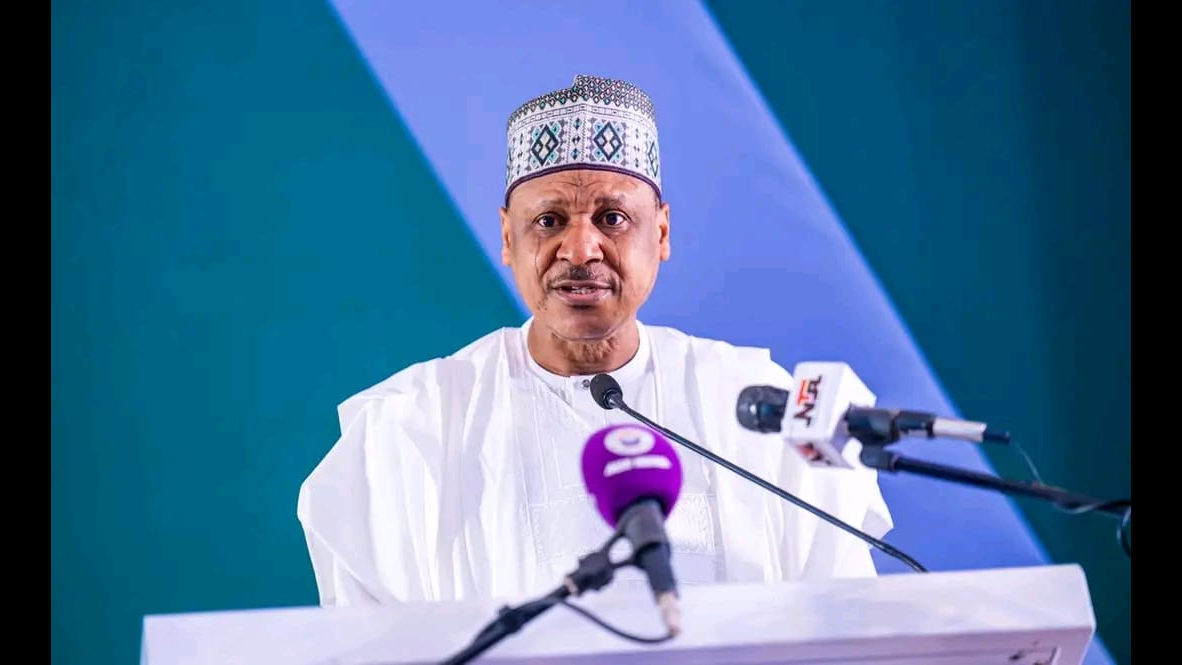
The clarification was made by the Minister of Information and National Orientation, Mohammed Idris, who addressed the issue while speaking with journalists yesterday in Abuja.
Idris explained that the intervention by the NNPCL was intended to cushion consumers against the effects of rising global oil prices, which have contributed to an increase in the pump price of petrol across the country.
According to the minister, the decision should not be misconstrued as a reintroduction of fuel subsidy, which the government removed last year as part of broader economic reforms aimed at stabilising the economy.
He noted that the NNPCL, although government-owned, operates as a limited liability company under the Petroleum Industry Act and has the flexibility to adjust its profit margins to support energy security and reduce pressure on consumers.
Idris said the company’s action was a business decision taken in the interest of Nigerians, to prevent petrol prices from rising beyond what many citizens can afford, given the current economic situation.
The minister stated that the NNPCL’s sacrifice of part of its profit was meant to serve as a buffer, ensuring that the impact of volatility in the international crude oil market does not lead to an unbearable spike in local fuel prices.
He emphasised that the Federal Government remains committed to its policy of deregulation in the downstream petroleum sector and has no plans to return to the old subsidy regime that cost the nation trillions of naira.
According to Idris, the temporary nature of the intervention means that the NNPCL will continue to review its pricing template in line with market realities, while still taking into consideration the need to protect consumers from excessive price shocks.
The minister’s explanation comes amid public debate and speculation that the Federal Government may have quietly reintroduced subsidy through the back door following the recent stabilisation of petrol prices despite rising global oil prices.
Some Nigerians had expressed concern that petrol prices did not increase as expected when crude oil prices went up in the international market, leading to insinuations that government had resumed payment of subsidy.
Idris, however, dismissed such insinuations, saying what the NNPCL did was to reduce its own profit margin to keep prices relatively stable, which is different from the government paying subsidy to marketers.
He explained that under the previous subsidy arrangement, the government was paying huge sums to cover the difference between landing cost and pump price, whereas now, the NNPCL is simply accepting lower profit to make fuel more affordable.
The minister acknowledged that Nigerians were still facing high living costs, with many households struggling to cope with the effects of fuel price increase, food inflation and other economic challenges.
Despite the hardship, Idris said the economy was showing signs of improvement, citing a projected growth rate of more than four per cent in 2026 and a decline in inflation from about 27 per cent in January 2025 to around 15 per cent.
He attributed the positive indicators to the economic reforms introduced by the administration of President Bola Tinubu, including fuel subsidy removal, unification of exchange rates and efforts to attract foreign investment.
Idris said the reforms, though painful in the short term, are beginning to yield results and will in the long run lead to a more stable and prosperous economy for all Nigerians.
He assured that the Federal Government is not insensitive to the plight of citizens and is implementing various palliative measures and social intervention programmes to cushion the impact of the reforms.
The minister listed some of the interventions to include distribution of food items, cash transfers to vulnerable households, support for small businesses and investment in agriculture to boost food production and reduce food prices.
He also said the government is working to improve public transportation and promote the use of Compressed Natural Gas as an alternative to petrol, which he said would help reduce transport costs and fuel consumption.
Idris called on Nigerians to be patient and to support the government’s efforts, saying that the sacrifices being made today would pave the way for sustainable economic growth and development in the near future.
He reiterated that the NNPCL’s decision to forgo part of its profit is purely a temporary business strategy to support Nigerians and should not be interpreted as a policy shift or return to the subsidy era.
The minister expressed optimism that with continued implementation of reforms and prudent management of resources, Nigeria’s economy would become more resilient and less dependent on crude oil revenue for survival.