
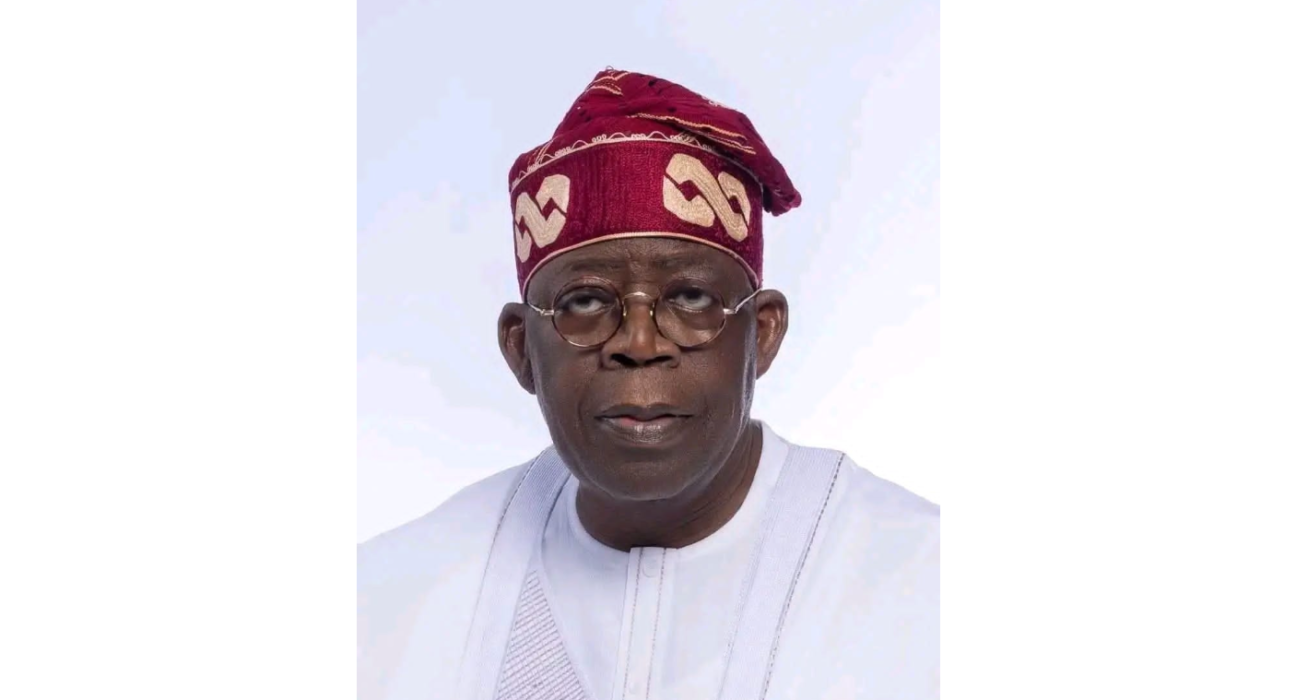
President Bola Ahmed Tinubu has risen in stout defence of the 300 per cent salary increase recently approved for judicial officers across the country, declaring that Nigerian judges cannot be expected to deliver justice, fairness and equity to the people when they are struggling with empty pockets, poor welfare and deplorable conditions of service.
The President, who spoke at a high-profile national event attended by top judicial officers, senior lawyers, members of the National Assembly, governors and other critical stakeholders in the justice sector, said the salary increment was not a favour or a political gesture, but a deliberate and necessary reform aimed at strengthening the independence, integrity and efficiency of the judiciary as the last hope of the common man.
Tinubu explained that for too long, Nigerian judges and other judicial officers have been subjected to poor remuneration, delayed allowances and inadequate working tools, despite the enormous responsibilities placed on their shoulders and the critical role they play in safeguarding democracy, upholding the rule of law and ensuring peace and stability in the country.
He noted that it was an aberration and a national embarrassment that judges, who are expected to adjudicate on high-profile cases involving billions of naira, election disputes, corruption cases and matters of national importance, were being paid salaries that could not take them home, and that could not guarantee them a decent standard of living after retirement.
According to the President, a hungry judge is a vulnerable judge, and a poorly paid judge is a judge who is easily exposed to temptation, inducement, manipulation and corruption, adding that if Nigeria truly desires a judiciary that is bold, impartial and incorruptible, then the country must be ready to pay its judges well and to take care of their welfare.
“Our judges cannot deliver justice with empty pockets. We cannot ask them to be above board, to resist bribery, to stand firm against powerful politicians and wealthy litigants, and yet leave them to wallow in poverty and deprivation. Justice must be well funded, if it must be well served,” Tinubu declared, to thunderous applause from the audience.
He said the 300 per cent increase, which covers the basic salaries and allowances of Justices of the Supreme Court, the Court of Appeal, the Federal High Court, the National Industrial Court, the Sharia Court of Appeal, the Customary Court of Appeal, as well as state High Court judges, magistrates and other judicial officers, was approved after careful consultations with the National Judicial Council, NJC, and the Revenue Mobilisation Allocation and Fiscal Commission, RMAFC.
The President disclosed that before the increment, the salaries of judicial officers had remained stagnant for over 16 years, despite the rising cost of living, inflation, devaluation of the naira and the increasing workload on the courts, a situation he described as unjust, unsustainable and a clear case of neglect of a vital arm of government.
He recalled that the last time the salaries of judicial officers were reviewed was in 2007, during the administration of former President Umaru Musa Yar’Adua, and that successive governments had failed to implement a new salary structure for the judiciary, despite repeated appeals, protests and warnings from the Nigerian Bar Association, NBA, and the NJC.
Tinubu said his administration, upon assumption of office, took the bull by the horns by prioritising judicial reforms, including the welfare of judges, the appointment of more justices to fill vacancies at the Supreme Court and other courts, the renovation of courtrooms, the provision of official vehicles and accommodation, and the deployment of technology to speed up justice delivery in Nigeria.
He stressed that the salary increase is part of his Renewed Hope Agenda for the justice sector, which is aimed at restoring public confidence in the judiciary, reducing the backlog of cases in courts, ensuring speedy dispensation of justice, and making the Nigerian judiciary one of the best in Africa and a model for other developing countries.
The President also used the occasion to charge judicial officers to reciprocate the gesture of the Federal Government by living up to expectation, by being diligent, punctual, incorruptible and courageous in the discharge of their duties, and by ensuring that justice is not only done, but is seen to have been done in all cases brought before them.
He warned that the government will not tolerate any form of corruption, indolence, or compromise from any judicial officer, noting that with the improved welfare package, there will be no excuse for any judge to engage in unethical conduct, to delay cases unnecessarily, or to give judgments that are not based on law, facts and conscience.
Tinubu also assured Nigerians that his administration will continue to respect the independence of the judiciary, in line with the principle of separation of powers, and will not interfere in the decisions of the courts, even when such decisions go against the government, because a strong, independent and fearless judiciary is the bedrock of democracy and good governance.
Reacting to the President’s defence, the Chief Justice of Nigeria, CJN, Justice Kudirat Kekere-Ekun, commended Tinubu for the salary increase, describing it as a historic and unprecedented intervention that has brought huge relief to judicial officers across the country, and has given them a new sense of belonging, dignity and motivation to serve the nation.
She said the increase will go a long way in attracting the best legal minds to the Bench, in retaining experienced judges who would have otherwise resigned to join private practice, and in discouraging corruption in the judiciary, adding that the NJC will ensure that the increased welfare translates to improved performance and better justice delivery for Nigerians.
Also speaking, the President of the Nigerian Bar Association, NBA, hailed the President for the bold step, noting that lawyers have for years been at the forefront of the agitation for improved welfare for judges, and that the 300 per cent increase is a victory for the entire legal profession and for all Nigerians who believe in the rule of law.
He, however, urged the Federal Government to go beyond salary increase, by also addressing other challenges facing the judiciary, such as the poor infrastructure in courts, the shortage of judges, the slow pace of trials, the high cost of litigation, and the need for full financial autonomy for the judiciary at both federal and state levels.
Some senior advocates and civil society organisations, who spoke to our correspondent on the development, also welcomed the salary increase, but cautioned that increased pay alone will not guarantee a corrupt-free judiciary, unless it is accompanied by strict discipline, accountability, transparency in the appointment of judges, and punishment for erring judicial officers.
They argued that while it is true that poor welfare can push some judges into corruption, there are also well-paid judges in other countries who still engage in corrupt practices, and that what Nigeria needs, in addition to good pay, is a strong system of checks and balances, an effective disciplinary mechanism, and a culture of integrity in the judiciary.
Meanwhile, some Nigerians have expressed mixed reactions to the 300 per cent salary increase, with many welcoming it as a step in the right direction, while others have questioned the timing of the increase, at a time when workers in other sectors, including teachers, doctors, nurses and civil servants, are still struggling with poor salaries, unpaid allowances and the high cost of living occasioned by the removal of fuel subsidy.
They argued that if the government can increase the salaries of judges by 300 per cent, it should also do the same for other workers, especially those in critical sectors like education, health and security, who are also rendering essential services to the nation, and who are also in need of improved welfare to perform their duties effectively.
But the Presidency has dismissed such concerns, explaining that the judiciary is a special and unique arm of government, whose independence and integrity are critical to the survival of democracy, and that the salary increase for judges should not be compared with that of other workers, as each sector has its own peculiarities, challenges and salary structure.
As the debate continues, there is no doubt that President Tinubu’s defence of the 300 per cent salary increase for judicial officers has once again brought to the front burner the issue of judicial welfare, judicial independence and the fight against corruption in the judiciary, with Nigerians now waiting to see whether the improved pay will translate to faster, fairer and more credible justice delivery in the country.