
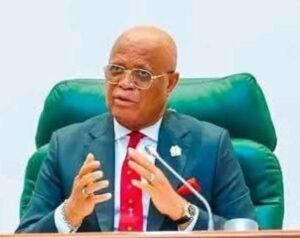
The controversy surrounding the proposed Akwa Ibom State housing estate in the Federal Capital Territory has intensified, as Dr. Eno R. Adams openly challenged the defence mounted by the President of Akwa Ibom Community, Abuja, Mkpisong (Barr.) Gabriel Fan, branding the initiative fiscally imprudent and ethically questionable.
In a strongly worded rejoinder titled “Stop Abuja Housing Estate, Prioritize Development in Akwa Ibom State: Setting the Record Straight,” Adams accused proponents of the project of elevating political optics above fiscal responsibility and long-term sustainability.
The debate was sparked by the Akwa Ibom State Government’s reported plan to establish a housing estate in Abuja, a move that has drawn mixed reactions from stakeholders.
While supporters describe it as a strategic investment to serve indigenes in the diaspora, critics argue that it diverts limited public resources from urgent developmental needs within the state.
Adams dismissed Barr. Fan’s assertion that “leadership transcends borders,” contending that the primary duty of any state government is to develop its territorial jurisdiction.
“A state government exists to develop the geography it governs,” Adams argued. “When it begins to build physical infrastructure outside its borders, it risks acting like a private real estate developer deploying public funds.”
He further questioned the rationale for choosing Abuja as the sole location for such an initiative, asking why similar estates were not being contemplated for Akwa Ibom indigenes in Lagos, Port Harcourt, Ibadan, or even overseas cities such as Houston.
According to him, the selective focus on Abuja creates what he described as a “hierarchy of indigenes,” potentially favouring a specific demographic over others.
Challenging claims that the project is a structured, subsidy-driven investment, Adams urged the government to confront what he termed the “cold mathematics of governance,” stressing that every Naira allocated to real estate in Abuja represents a missed opportunity to address pressing needs at home.
He listed primary healthcare in Ikot Ekpene, rural electrification in Ini, and agro-processing facilities across the state as priority areas that demand immediate attention.
Adams warned that Akwa Ibom’s heavy reliance on oil revenue, which he described as a “wasting asset” makes it imperative for the state to invest prudently within its own borders rather than channel proceeds into Abuja’s property market.
“We are mining a finite resource. To invest its proceeds outside our territory while rural roads and schools remain in dire condition is economically unsound,” he stated.
As an alternative, Adams proposed a universal, state-backed mortgage scheme that would enable qualified indigenes to access credit facilities to acquire homes anywhere, based strictly on merit and repayment capacity.
“A mortgage scheme removes jealousy because it is universal. It does not create winners and losers based on geography,” he maintained, adding that such a policy would promote equality of opportunity without accusations of favouritism.
He also urged the Akwa Ibom State House of Assembly to exercise its constitutional oversight to prevent what he described as potential “squandering of the commonwealth.”
Emphasising the principle of intergenerational equity, Adams called for a sovereign wealth framework that would preserve part of the state’s oil earnings for future generations.
“The wealth of Akwa Ibom belongs as much to the child born in 2050 as it does to us today,” he said. We must build our state first before projecting development elsewhere.”
As public discourse continues, the Abuja estate proposal remains a polarising issue, pitched by supporters as a forward-looking investment strategy, but criticised by others as a misplaced priority amid pressing domestic challenges.
