
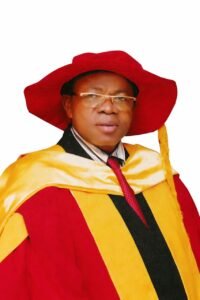
A Professor of Business Administration at the University of Uyo, Patrick Linus Akpan has raised alarm over what he described as a “suffocating” Nigerian economy, weighed down by persistent disruptions, policy inconsistencies, and widespread mismanagement, urging urgent structural reforms to reposition the nation for sustainable growth.
Delivering the 130th inaugural lecture of the University on Thursday March 26, 2026, the scholar painted a grim picture of Nigeria’s management and economic landscape, stressing that decades of instability have fundamentally altered the nation’s governance and business environment.
The lecture, titled “Disruptions and the Changing Face of Management in Nigeria: Ventilating a Suffocating Nation,” highlighted how macroeconomic challenges such as exchange rate volatility, inflation, insecurity, and policy failures have combined to stifle productivity and weaken institutions.
According to the professor, Nigeria’s economy has remained at a crossroads since independence in 1960, with growth largely driven by consumption rather than productive capacity, a trend he said has worsened poverty, unemployment, and business failures.
He noted that the country’s management systems are undergoing a forced transformation from rigid, bureaucratic structures to more agile, technology-driven models, but warned that inadequate capacity, poor implementation, and weak leadership continue to hinder progress.
The don identified insecurity, including terrorism, kidnapping, and armed violence, as a major disruption to economic development, saying it has discouraged investment, reduced industrial output, and increased the cost of doing business.
“An atmosphere of insecurity makes meaningful business development impossible,” he stated, adding that the economic cost of terrorism and violence has reached alarming levels, with businesses shutting down and multinational firms relocating to safer environments.
Prof. Akpan further decried what he termed systemic mismanagement in both public and private sectors, linking it to corruption, poor decision-making, and weak regulatory frameworks.
These, he said, have led to inflation, infrastructure decay, and declining living standards.
The professor also pointed to policy inconsistency and failure as critical challenges, noting that many government policies have failed due to poor formulation, weak political will, and lack of accountability.
On the implications for businesses, he said manufacturing firms are experiencing declining sales, rising unsold inventories, and massive layoffs, while small enterprises struggle to survive amid rising operational costs and unstable power supply.
He disclosed that Nigeria’s inflation rate and currency depreciation have significantly eroded purchasing power, creating widespread anxiety among citizens and forcing managers to focus more on survival strategies than growth.
Despite the bleak outlook, the inaugural lecturer proposed a range of solutions aimed at “ventilating” the nation’s economy.
These include; strengthening security architecture, promoting good governance and accountability, stabilizing the foreign exchange market, and reducing dependence on oil by diversifying the economy.
He also advocated increased investment in infrastructure, especially power and transportation, as well as policies to boost local production, create jobs, and support small businesses.
On unemployment, he described the situation as “desperate,” noting that joblessness has surged dramatically, with youths bearing the brunt.
He called for targeted interventions such as vocational training, public works programmes, and private sector partnerships to stimulate employment.
The professor emphasized the need for fiscal discipline and better public expenditure management, urging government to reduce the cost of governance and prioritize capital projects over recurrent spending.
He concluded that, Nigeria’s path to recovery lies in coordinated economic policies, institutional reforms, and a renewed commitment to transparency and effective leadership.
“The nation is not beyond redemption,” he said, “but bold actions and strategic management are required to move Nigeria from economic suffocation to sustainable prosperity.”
