

UYO – Civil society organizations, media executives and governance stakeholders have called on the Akwa Ibom State House of Assembly to expedite the passage of the proposed Civil Society Organizations (CSOs) Harmonization Bill.
The group describe the proposed passage of the bill as a landmark reform capable of strengthening civic engagement, transparency and accountability in the state.
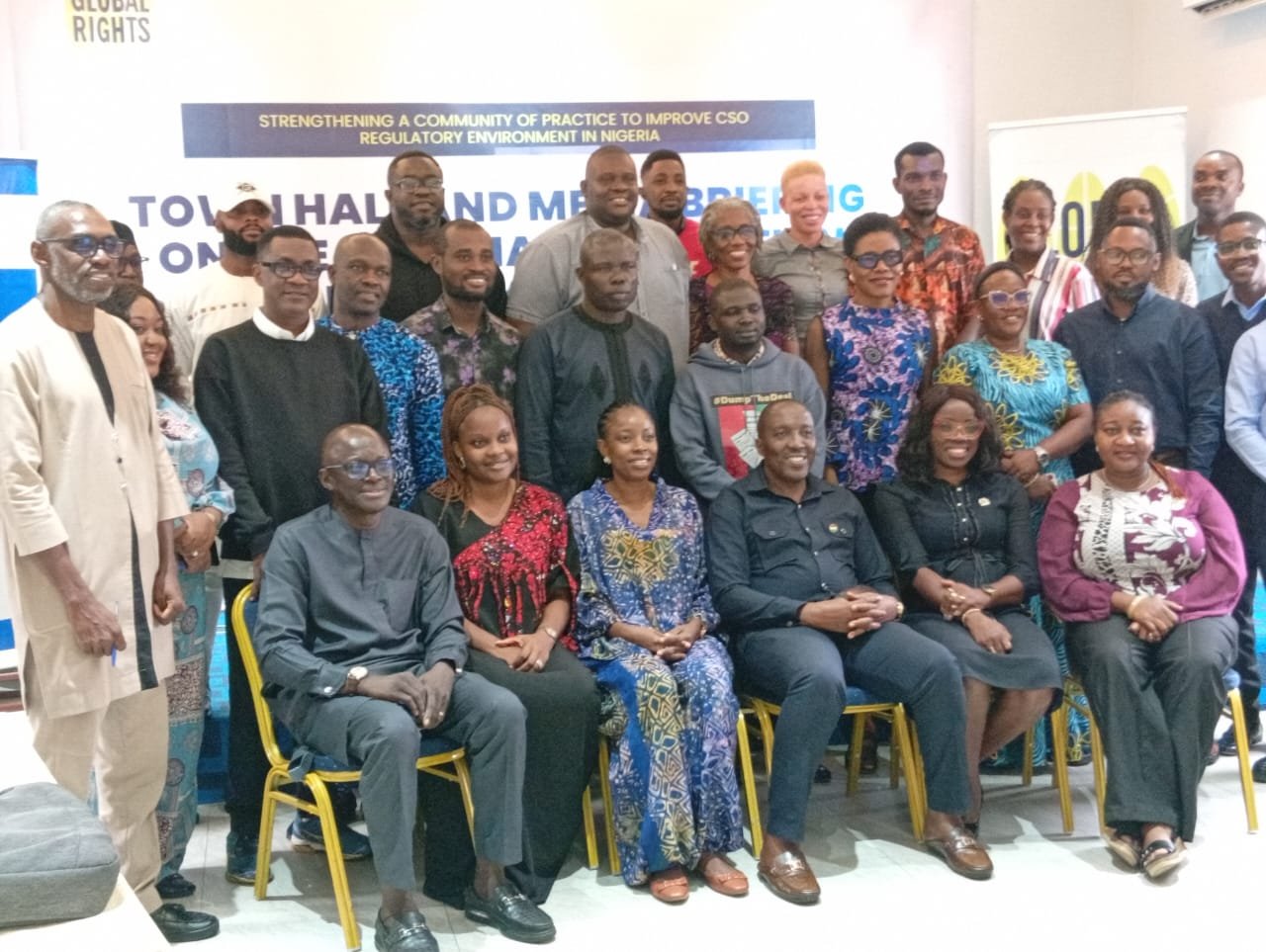
The call formed the major resolution of a Town Hall and Media Briefing on the draft Civil Society Organization Registration Bill, 2026, held on Thursday July 9, at Fresh Spring Hotel, Uyo, under the auspices of the Community of Practice (CoP) on Civic Space Strengthening with support from Global Rights.
In a communiqué issued and signed by the Secretariat of the Community of Practice (CoP) Steering Committee and made available to newsmen at the end of the meeting, participants noted that the gathering marked the culmination of a three-year multi-state initiative aimed at strengthening Nigeria’s civic ecosystem.
They emphasized that while the project cycle may be ending, the campaign for an enabling legal framework for civil society in Akwa Ibom must continue.
The stakeholders commended Akwa Ibom State for its improved performance on the National Regulatory Environment Dashboard, where the state attained a peak score of 50, attributing the achievement to committed leadership and sustained stakeholder engagement.
However, they stressed that the progress must be consolidated through legislation.
Among the key resolutions adopted was the endorsement of the proposed establishment of the Akwa Ibom State CSO Registry under the Ministry of Humanitarian Affairs as the sole registration point for civil society organizations in the state.
Participants argued that the centralized system would eliminate multiple registration requirements and duplicate levies imposed by various Ministries, Departments and Agencies (MDAs), which they said have long burdened civil society groups.
The stakeholders also applauded the bill’s provision for a mandatory online registration and directory system, describing it as a major step toward eliminating bureaucratic bottlenecks, delays and opportunities for extortion.
They insisted that the digital framework should be retained in the final legislation and aligned with the Nigerian Digital Privacy Act to ensure transparency, accountability and data protection.
Recognizing the possibility of delays in securing gubernatorial assent, the meeting further endorsed a “twin-track” implementation strategy that would allow the State Head of Service to issue a regulatory circular to commence harmonization efforts pending the completion of the legislative process.
On governance and oversight, participants stressed the need to safeguard the independence of the proposed five-member registry board.
They maintained that civil society organizations must retain the right to independently nominate three representatives to the board and that all members should possess equal voting powers to prevent political interference.
The communiqué also called for equal qualification standards for members of the proposed appeal board, recommending that civil society nominees possess at least ten years of sector experience, the same benchmark required for the State Registrar.
As the European Union-funded project supporting the initiative draws to a close on July 13, stakeholders resolved to sustain advocacy efforts and ensure that the reform agenda remains driven by local actors.
They further tasked the media with sustaining public awareness and advocacy campaigns aimed at mobilizing support for the bill and compelling lawmakers to prioritize its passage.