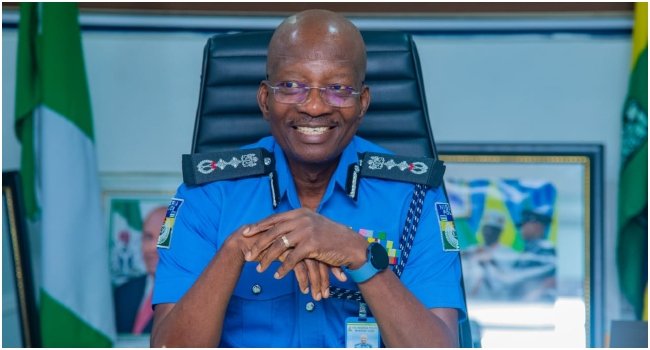

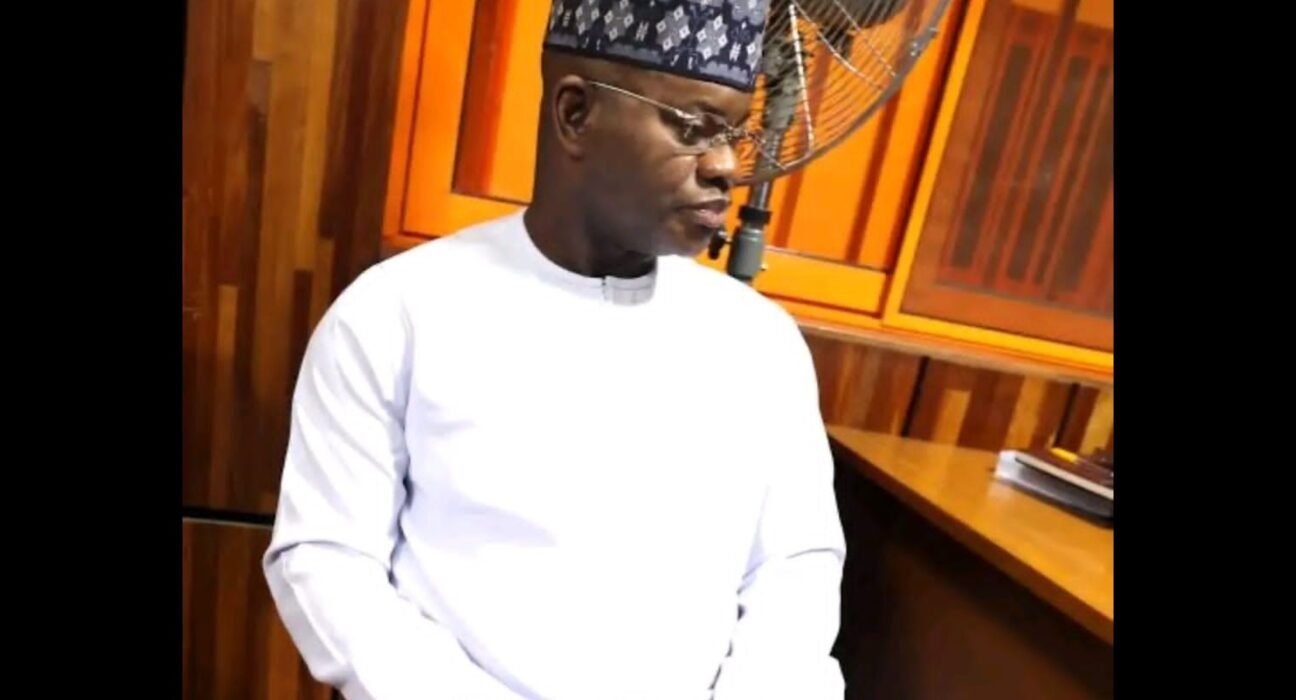
A detective attached to the Economic and Financial Crimes Commission, Mr. John Justice, on Tuesday, 24th November, 2026, mounted the witness box at the Federal Capital Territory High Court, Maitama, Abuja, and unfolded before Justice Maryanne Anineh how public money belonging to Kogi State councils was allegedly channelled into servicing a huge loan that was later traced to the education of the children of the former governor, Alhaji Yahaya Bello.
Justice, who testified as the twentieth witness for the prosecution in the N110.4 billion alleged fraud case against Bello, narrated how Keyless Nature Limited allegedly secured a facility of N2.1 billion, which was later defrayed through steady remittances coming from the accounts of several local government councils in Kogi State.
Under the guidance of the lead prosecuting lawyer, Mr. Kemi Pinheiro, SAN, the operative explained that the probe linked the loan to an account operated in the name of one Abba Adaudu, and that after the money was drawn down, it was moved around through fronts, including foreign exchange dealers and the private account of one Jamilu Abdullahi.
Drawing the attention of the court to various bank records, the witness said detectives followed steady credits from numerous councils in Kogi into the account of the firm from 2021 up to December 2024, a window that fell squarely within the period Bello held sway as governor of the state.
He listed the councils whose funds allegedly flowed into the account to include Ajaokuta, Ankpa, Ibaji, Omala, Ogori-Magongo, Ofu, Olamaboro, Okehi, Kogi, Kabba-Bunu, Ijumu and Igalamela-Odolu, among several others, adding that the pattern suggested a well-coordinated arrangement involving virtually the whole council system.
While affirming the regularity of the lodgements, Justice told the court that the credits arrived every month without fail into the Keyless Nature account, and that when put together, the description on the statements pointed to repayment of principal, a disclosure that left the courtroom in hushed silence.
When quizzed on why the facility was taken in the first place, the investigator said findings indicated that it was obtained to give the deal a look of legitimacy, whereas in reality, the councils were left to carry the load of paying it back.
“My lord, in effect, it was the councils that shouldered the repayment,” he declared, painting a picture of grassroots resources allegedly being siphoned to clear a private debt that had no bearing on council administration.
The witness further disclosed that the Commission wrote letters to the affected councils demanding explanation for the transfers, seeking to know what jobs were done or what services were supplied to warrant such payments, but up to the day he testified, none of the councils had replied.
He added that Abba Adaudu was summoned by the anti-graft agency but could not tender any paper to prove that any job was awarded or executed by the firms that benefitted from the money, a failure which, according to investigators, exposed the transactions as mere cover.
“Abba Adaudu could not produce any paper to show any job,” he told the court, stressing that the absence of contract papers was strong proof that no genuine job existed and that the payments lacked lawful backing.
Justice equally informed the court that investigators could not trace any job given to Keyless Nature, Hayzma and Forza Oil and Gas by the councils, notwithstanding the enormous sums that passed to them and their claim that they rendered services to the councils.
He said Hayzma claimed it supplied medicines to the councils, yet it could not mention the names of its drug suppliers, where it sourced the drugs from, proof of its approval by the National Agency for Food and Drug Administration and Control, NAFDAC, or any other paper to back its claim as a genuine drug firm.
The investigator said findings showed that one Siyaka Adebenege, who was linked to the outfit, was a bookkeeper and not a chemist, a discovery which further punctured the claim of the firm and showed it lacked the competence to supply drugs to the councils.
He added that the head of the firm, Abba Adaudu, could not show how the purported jobs were carried out, where the drugs were delivered, who took delivery, and how they were shared to health centres in the council areas, as he had no records whatsoever to present.
According to him, a portion of the loan was routed to foreign exchange dealers, including Jamilu Abdullahi, while another portion was moved to different accounts, in a tangled chain of transfers meant to hide the origin of the funds and the real owners.
When asked who benefited from the cash withdrawals, Justice named Kunfayakun Global Limited, E-traders International Limited and the private account of Jamilu Abdullahi as the main beneficiaries, noting that the firms and the individual were used as pipes to move the money out of the banking system into private hands.
He said detectives discovered that some of the withdrawals were later treated as physical cash and paid back into the accounts of the firms to hide the true owners of the money, a classic laundering trick called layering, deployed to make tracing difficult for investigators.
Earlier in his evidence, Justice had narrated how investigators followed cash withdrawals and later dollar deals involving firms and persons allegedly used to make payments to the American International School, Abuja, one of the costliest schools in the country, where Bello’s children were enrolled.
He explained that managers and operations heads of Access Bank and Zenith Bank were invited during the probe and freely gave statements, details of their branches’ cash-handling limits and insurance cover, which assisted investigators to grasp how such massive cash withdrawals were effected.
According to him, the bankers said their branches lacked the ability to handle the size of some of the withdrawals, as the sums were far above what the branches could ordinarily pay out, given their cash ceilings and insurance arrangements.
“Their branches lacked the ability to effect that withdrawal. Their limit is about N170 million, my lord,” he said, quoting the bankers, in evidence that raised posers about how the banks allowed such huge withdrawals despite their known limits.
The witness added that the banks supplied CCTV recordings showing how some of the withdrawals were collected by Kunfayakun Global Limited, E-traders International Limited, Jamilu Abdullahi’s private account and other bodies, recordings that have become a vital part of the proof in the trial, and that show the physical movement of the cash.
He said findings showed that the firms treated some of the withdrawals as cash before lodging the money into other accounts, to hide the true owners, and to make it look as if the money came from lawful business, whereas it came from the treasury of Kogi State.
Justice further told the court that a search of the accounts and later study of the statements showed that Jamilu Abdullahi, a foreign exchange dealer, had stakes in some of the firms, and that he was not just an innocent dealer, but an active player in the alleged laundering ring.
He said the beneficiaries of Kunfayakun, E-traders and Jamilu Abdullahi were invited and claimed the money was for buying United States dollars, which were later handed to Abdullahi, a claim investigators found inconsistent and unbelievable, given the volume of the deals and the pattern of the payments.
According to him, Abdullahi, when invited, said he did not know Hayzma, Bibas and Forza Oil and Gas but knew one Abba Adaudu, a statement that established the link between Abdullahi and Adaudu, and placed Adaudu as the coordinator of the deals.
The witness explained that Abdullahi later told investigators that Adaudu gave directives for payments to be made both at home and abroad in dollars, and that he, Abdullahi, merely obeyed the directives, by sourcing dollars and paying the beneficiaries as directed by Adaudu.
He said Abdullahi engaged Whales, Forza Oil and Gas and Alyeshua to carry out the deals, while Adaudu supplied details of the beneficiaries, including account numbers, sums to be paid, and names to be used as references for the payments, so the school would know who the payments were meant for.
Justice told the court that a part of the payments went to the American International School, Abuja, while others were sent to the school’s account held with TD Bank outside Nigeria, in the United States, in a clear bid to move the funds out of Nigeria and hide them from Nigerian authorities.
He said the payments were for the tuition of four children of the first accused person, Yahaya Bello, and Zayyan Ali Bello, the son of his nephew, Ali Bello, who is also standing trial in the case, and who is the present Chief of Staff to the Governor of Kogi State.
The witness named the former governor’s children as Na’ima Bello, Farid Bello, Fatima Bello and Zahra Bello, while Zayyan Ali Bello was named as the child of Ali Bello, noting that all five children attended the American International School, Abuja, at an enormous cost to the Kogi State Government.
He described Ali Bello as the nephew of Yahaya Bello and the present Chief of Staff to the Kogi State Governor, a position that has made him a powerful figure in Kogi State, and that allegedly enabled him to coordinate the payment of the tuition on behalf of his uncle.
While pointing to Exhibit AX7, a TD Bank statement, Justice picked out several dollar entries which he said matched payments to the American International School, and which tallied with the school’s records, showing the payments were truly received by the school.
He pointed to entries of US$49,575 and US$45,675 in the November 2021 records, and also picked out deals of US$78,125 and US$42,145 recorded on January 25 and 26, 2021, respectively, all of which he said were tuition payments for the children.
The witness further pointed to four lodgements recorded on September 7, 2021, and picked out US$74,920.71 linked to the school’s confirmation of tuition payments, and also picked out payments of US$44,675 and US$10,975 made on November 12 and 15, 2021, respectively, all traced to the firms and persons in the ring.
Another lodgement of US$90,000 was picked out on February 15, 2022, into the school’s TD Bank account, which the witness said was also for the children’s tuition, and which was traced to Dada’s Grant Merchants Limited, one of the firms used in the ring.
Pointing to Exhibit AX5, containing mail exchanges between the school and Ali Bello, Justice explained that the mails formed part of the proof gathered during the probe, and that they clearly tied Ali Bello to the payments, and showed he was the one coordinating the payments on behalf of Yahaya Bello.
He told the court that Jamilu Abdullahi revealed the firms he engaged to carry out the deals, while the head of the school freely gave a statement to the Commission, in which she confirmed receipt of the payments, and handed the school’s records to the investigators.
Pointing to page one of the exhibit, the witness picked out a mail from the school to Ali Bello confirming receipt of US$44,675 for Na’ima Bello on November 12, 2022, and also pointed to an entry in Exhibit AX7 dated November 5, 2022, showing a transfer of US$44,675 from Forza Oil and Gas, which matched the mail.
At page three of Exhibit AX5, Justice picked out another mail from the school to Ali Bello confirming receipt of US$78,131, and told the court that Ali Bello was also called Atinko in the mails and confirmed that the payments were for the tuition of the first accused person’s children.
The witness further pointed to an entry of January 25, 2022, showing a payment of US$78,105, which he linked to the firms engaged by Jamilu Abdullahi, and said the withdrawals and payments tallied with the sums in the school’s records, showing a clear link between the council funds and the tuition.
At page five of the mail bundle, Justice picked out a mail from Adesua Osai of the school to Ali Bello on payments totalling US$94,250 for Zahra and Fatima Bello, in which the mail asked Ali Bello to state how the sum should be split between the two children to enable the school to issue the right receipts.
The witness also pointed to page seven, which held a mail from Adesua Osai confirming payments of US$74,920.71 for the children, which he said tallied with the four lodgements in the TD Bank account on September 7, 2021, while another mail from the school confirmed receipt of US$78,135 for Fatima Bello.
Justice also picked out the November 15, 2021 deal of US$10,975, explaining that a mail from Adesua Osai to Ali Bello confirmed receipt of the payment for Farid Bello, and on the US$90,000 transfer of February 15, 2022, from Dada’s Grant Merchants Limited into the American International School’s TD Bank account, the witness pointed to a mail confirming receipt of the money for Zayyan Ali Bello’s tuition.
He explained that though Ali Bello did not make the transfer himself, the mail confirmed the payment was tied to him, saying, “Even though he didn’t pay directly, the mail confirms that the money came from him,” a statement that further nailed Ali Bello to the ring.
The witness also picked out Exhibit AX4 as a pact for prepaid tuition until graduation, signed by the head of the school and signed for Yahaya Bello by Ali Bello on August 21, 2021, and explained that investigators asked the school to produce the paper showing the arrangement for advance payment of the fees.
He told the court that the school had explained that it could not take payments covering more than two terms at a time, which made the family representative and the school enter into a pact for payment until the children’s graduation, and that the payments covered tuition and other related charges for the period, for the four children of Yahaya Bello and Zayyan Ali Bello, the son of Ali Bello.
Justice further told the court that the Commission wrote to the American International School asking for a refund of US$760,910.84, being fees paid in advance for the tuition of Yahaya Bello’s children, and pointing to Exhibits AX8 and AX9, he said the probe showed the purpose of the payments was to launder funds belonging to the Kogi State Government.
Reading from the EFCC’s letter to the school, the witness said the Commission asked for a refund of the money while probe continued to unravel the persons involved and recover the funds for the Federal Government of Nigeria through the EFCC, and that the school later wrote to the EFCC’s Lagos Zonal Command, asking for official details of the account into which the money should be refunded in bits.
Justice confirmed that the school obeyed the request and refunded the whole US$760,910.84 to the Federal Government through the EFCC, and when asked whether any member of the Bello family had come to the Commission to ask for recovery of the money, the witness answered in the negative, saying no member of the family had come forward to claim the money.
The witness also picked out Exhibit AX10 as telex papers on the offshore transfers into the school’s TD Bank account, and said the papers named Forza Oil and Gas as one of the customers starting the transfers and the American International School as the beneficiary, with the payment references carrying the names of the children earlier named.
Further in his evidence, Justice was pointed to Exhibit AY1, a court paper in a case between Ali Bello and the Incorporated Trustees of the American International School, and told the court that the papers held an affidavit in which Ali Bello explained the arrangement for advance payment of tuition for his uncle’s children and his own son, Zayyan Ali Bello.
According to the witness, Ali Bello stated in the affidavit that Yahaya Bello had four children in the school and that the tuition was arranged through a foreign exchange dealer in varying instalments, and also pointed to Ali Bello’s explanation of the payment arrangement and the pact covering the children’s education until graduation.
Following the evidence, Pinheiro sought to tender the papers, and there was no objection from counsel to the accused persons, and Justice Anineh admitted them and marked them as Exhibits AY1A and AY1B, while reading from the court’s ruling in the papers, the witness drew attention to the refusal of a prayer seeking a declaration that fees paid by Yahaya Bello could not be forfeited or refunded to the government or any body.
He told the court that the prayer was refused because the applicant lacked the standing to seek such a declaration, and that the court’s ruling was that the applicant had no standing and that the right party to pursue the claim was the governor or the government, a ruling that has now cleared the way for the EFCC to recover the funds.
Justice was also pointed to other exhibits, including bank statements and deal records on Keyless Nature Limited, which he said formed part of the proof used to trace the movement of funds from the loan to the various beneficiaries, and maintained that the probe established a pattern of monthly credits from Kogi State council accounts, followed by transfers and cash withdrawals.
The matter was adjourned till December 2 and 14, 2026, January 26, and February 2 and 3, 2027, for continuation of trial, as Bello is being tried alongside Umar Shuaibu Oricha and Abdulsalami Hudu on a 16-count charge bordering on criminal breach of trust and money laundering involving N110.4 billion, a charge to which they have all pleaded not guilty.