

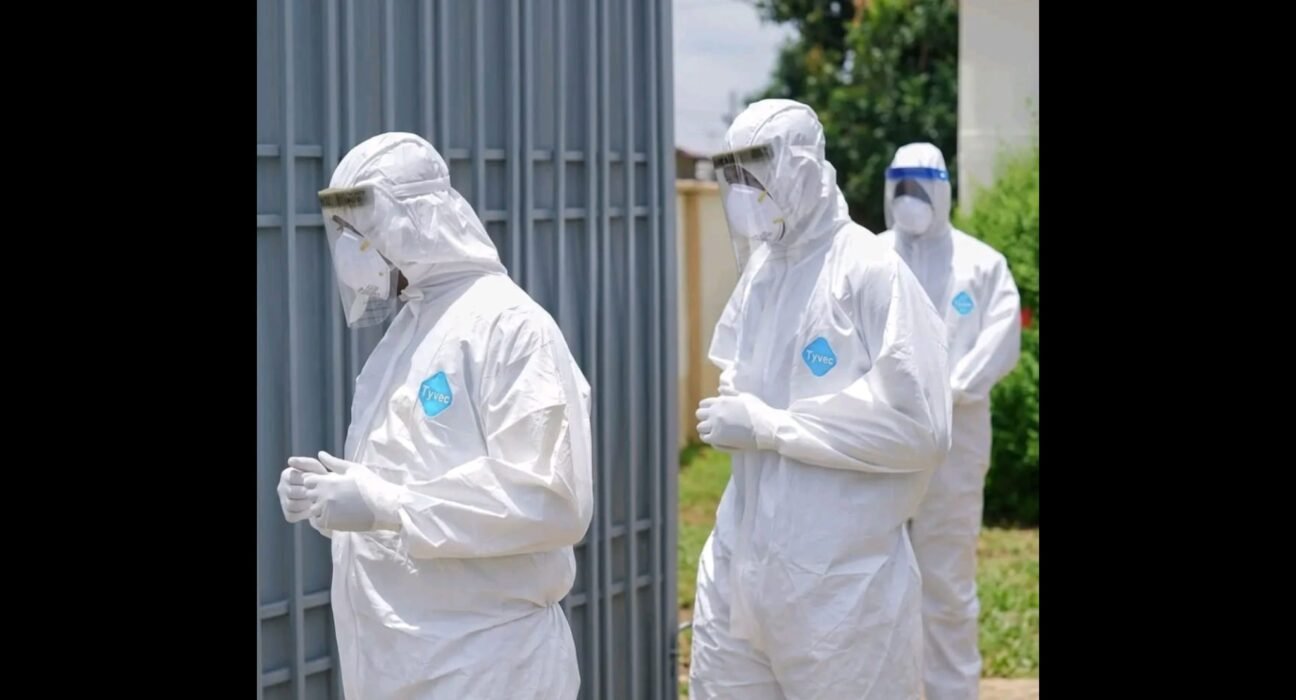
There is heightened concern among health experts across the country following the confirmation of an imported case of Ebola Virus Disease in the Federal Capital Territory, Abuja.
The Federal Government, through the Federal Ministry of Health and relevant health agencies, confirmed that a woman who recently returned from Uganda tested positive for the deadly virus.
According to official reports, the infected woman had travelled to Uganda in East Africa and started showing symptoms of the disease shortly after her arrival back in Nigeria.
The development has prompted calls from public health professionals for increased vigilance and strict compliance with public health guidelines to prevent further transmission of the virus.
Health experts warned that Ebola is a highly infectious and potentially fatal disease that requires prompt detection, isolation and management to avoid community spread.
Speaking on the nature of the virus, health expert, Blessing Luke, provided detailed insights into how the disease is transmitted from person to person.
She explained that Ebola is spread through direct contact with bodily fluids of an infected person, such as blood, saliva, vomit, urine, faeces and sweat.
Blessing Luke noted that transmission can also occur through contact with contaminated objects, surfaces and materials that have been in contact with infected bodily fluids.
She further stated that burial ceremonies involving direct contact with the body of a deceased Ebola patient pose a very high risk of transmission if not properly handled.
On the symptoms of the disease, the health expert advised members of the public to watch out for sudden onset of fever, severe headache, muscle pain and general weakness.
She added that other symptoms include vomiting, diarrhoea, abdominal pain, sore throat and in severe cases, unexplained bleeding from different parts of the body.
According to her, anyone who has recently travelled to an Ebola-affected country or has had contact with a suspected case and begins to show these symptoms should seek immediate medical attention.
Blessing Luke emphasized that early reporting to a health facility greatly improves chances of survival and helps to protect family members and the wider community.
She urged Nigerians not to engage in self-medication but to call designated emergency lines or visit the nearest health facility if they suspect exposure to the virus.
Meanwhile, another health expert, Christiana Edem, highlighted the importance of contact tracing as a critical tool in containing the spread of Ebola.
She explained that contact tracing involves identifying, monitoring and following up all persons who may have come into contact with the confirmed case to ensure early detection of new infections.
Christiana Edem stated that effective contact tracing, when combined with prompt isolation and treatment, has been proven to be highly effective in breaking the chain of transmission.
She also drew attention to the state of preparedness of health facilities across the country, stressing that hospitals and clinics must be equipped to manage both suspected and confirmed cases.
According to her, health workers should be provided with adequate personal protective equipment and should strictly adhere to infection prevention and control protocols.
She called for continuous training of frontline health workers and sensitization of communities, especially in the FCT and neighbouring states, to ensure rapid response to any suspected cases.
In the meantime, members of the public have been advised to strictly follow verified guidance issued by the Nigeria Centre for Disease Control and Prevention.
The agency urged Nigerians to maintain good hygiene practices, avoid contact with suspected cases, and promptly report any suspected exposure to appropriate health authorities for immediate action.