
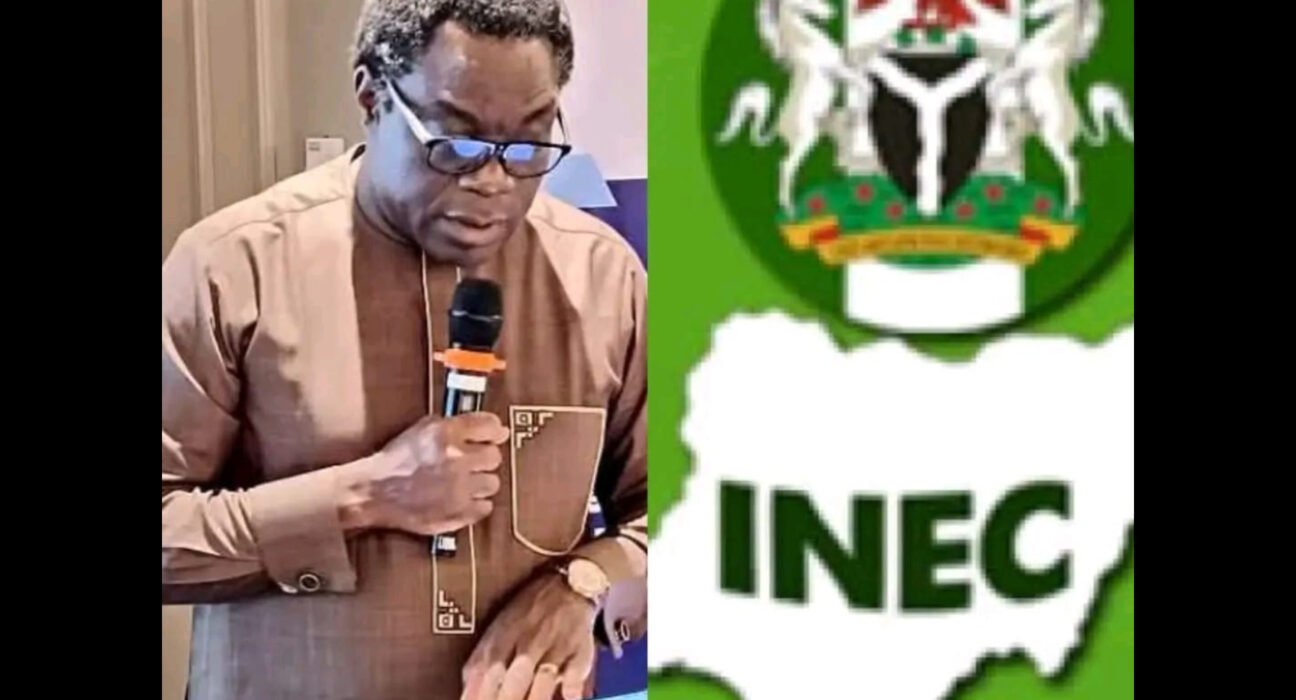
The Independent National Electoral Commission, INEC, has sparked fresh controversy and heated debate across the country after disclosing that it will not be able to publish election results at the ward, local government and state collation levels on its Result Viewing Portal, IReV, during the 2027 general elections, despite allocating a staggering N873.78 billion for the conduct of the polls.
The disclosure, which was made by top officials of the Commission during its budget defence and interactive session with members of the National Assembly, has raised serious questions about the preparedness of the electoral body, the transparency of the 2027 electoral process, and the fate of the technological reforms that were introduced with so much fanfare ahead of the 2023 general elections and promised to transform elections in Nigeria.
According to INEC, the whopping sum of N873.78 billion is the total amount it requires to successfully conduct the 2027 general elections, covering logistics, personnel allowances, procurement of sensitive and non-sensitive materials, training of ad-hoc staff, deployment of technology, voter education, security arrangements and other critical electoral activities across the 176,846 polling units, 8,809 wards, 774 local government areas and 36 states plus the Federal Capital Territory.
However, in a shocking twist that has left many Nigerians bewildered, the Commission admitted that despite the huge budgetary provision and the lessons learnt from the 2023 general elections, the system required to upload and publish results from the ward, local government and state collation centres on IReV has not yet been built, tested or deployed, and therefore cannot be deployed for the 2027 elections as currently envisaged.
INEC explained that the IReV platform, as presently designed, configured and operated, was built primarily for the direct upload of polling unit results from the Bimodal Voter Accreditation System, BVAS, immediately after voting, counting and announcement at the polling units, and was not designed to accommodate the uploading of collated results from the higher levels of the collation chain where results are aggregated and declared.
The Commission further explained that building a new system or expanding the existing IReV infrastructure to accommodate ward, local government and state collation results would require a complete redesign of the software architecture, development of new modules, rigorous testing, training of collation officers, procurement of additional hardware, and robust cybersecurity measures to prevent hacking, manipulation and unauthorised access to the portal during the sensitive collation period.
Top officials of INEC who spoke at the session told the lawmakers that the Commission had not anticipated the need for such an expanded system at the time IReV was first conceived, and that the demand for collation-level uploads only became prominent after the controversies that trailed the 2023 presidential election, when Nigerians demanded greater transparency in the collation process and not just at the polling unit level.
They maintained that while the Commission remains committed to transparency, credibility and the use of technology to improve elections, it would be technically impossible, risky and counterproductive to rush the building of a new collation results upload system without adequate time, funding, testing and legal backing, warning that a hastily built system could be vulnerable to failure, cyberattacks and litigation that could undermine the entire election.
The revelation has since triggered a wave of reactions from civil society organisations, election observation groups, political parties, legal practitioners, media organisations and ordinary Nigerians, many of whom have described the position of INEC as disappointing, unacceptable and a major setback to the gains recorded in electoral reforms and technological innovation in the country.
Civil society organisations, under the umbrella of the Nigeria Civil Society Situation Room and other election monitoring coalitions, said they were deeply worried that INEC is coming up with excuses after collecting such a huge budget, arguing that transparency at the collation centres is even more important than at the polling units because it is at the collation centres that results are most vulnerable to alteration, manipulation and outright falsification by desperate politicians.
They argued that Nigerians vividly remember how in previous elections, results announced at polling units were different from those eventually declared at ward, local government and state collation centres, leading to widespread suspicion, protests, litigation and loss of confidence in the electoral process, and that the only way to cure that mistrust is to make collation results visible to the public in real time on IReV.
Opposition political parties, including the Peoples Democratic Party, Labour Party and other smaller parties, have also reacted angrily to the disclosure, accusing INEC of deliberately refusing to build the system as a ploy to create room for manipulation in 2027, and warning that any attempt to conduct the 2027 elections without full transparency at all collation levels would be resisted by Nigerians and challenged in court and on the streets.
They insisted that with N873.78 billion at its disposal, INEC has no excuse whatsoever for not building the system, noting that the amount is more than enough to build a world-class, secure and robust electronic transmission and viewing platform that can handle polling unit results, ward results, local government results and state results simultaneously without glitches or downtime.
On the other hand, supporters of the ruling All Progressives Congress and some officials of the Federal Government have urged Nigerians not to politicise the issue, arguing that INEC is an independent body that should be allowed to explain its technical challenges, and that the focus should be on how to support the Commission to deliver credible elections rather than attacking it over a system that was never part of the Electoral Act in the first place.
Legal experts who spoke to our correspondent on the matter pointed out that the Electoral Act 2022, as amended, does not expressly mandate INEC to upload collation-level results on IReV, but only provides for the transmission of polling unit results, adding that the clamour for collation-level uploads is a product of public expectation and judicial interpretation rather than a clear statutory obligation on the Commission.
They, however, noted that the Electoral Act gives INEC broad powers to adopt any technological device or procedure it deems necessary for the conduct of elections, and that the Commission could, if it truly desired transparency, invoke those powers to build and deploy a collation results upload system, rather than hiding behind the excuse that the system was not built from the beginning.
It would be recalled that ahead of the 2023 general elections, INEC had assured Nigerians that IReV would be a game changer that would allow citizens to view polling unit results in real time from anywhere in the world, but the failure of the portal on the night of the presidential election and the subsequent inability of Nigerians to access results as promised became one of the biggest controversies of that election and led to several petitions at the Presidential Election Petition Tribunal.
Many Nigerians had hoped that the lessons from 2023 would push INEC to improve the IReV system, expand its capacity and make it more robust for 2027, including the uploading of results from ward collation centres where results from several polling units are aggregated, to local government collation centres where ward results are further collated, and to state collation centres where the final results for governorship and presidential elections are declared.
Political analysts say the ward collation level is particularly critical because it is the first point of aggregation after the polling units, and any manipulation at that level can distort the entire outcome of an election, while the local government collation level is where results from all the wards in a local government are consolidated, making it another vulnerable point that requires public scrutiny and real-time visibility.
They also say the state collation level is where the fate of governorship and presidential candidates is decided, as the State Collation Officer announces the final figures that are transmitted to Abuja, and therefore Nigerians deserve to see the Forms EC8B, EC8C and EC8D, which are the ward, local government and state result sheets, on IReV as soon as they are completed, signed and announced, just as they see Form EC8A from the polling units.
During the budget defence session, members of the National Assembly reportedly expressed dissatisfaction with the explanation of INEC, with some lawmakers questioning how the Commission intends to spend N873.78 billion if it cannot deliver a simple technological upgrade that would guarantee transparency and restore public confidence in elections that have continued to be dogged by allegations of rigging and manipulation.
Some of the lawmakers, who spoke on condition of anonymity, said they were surprised that INEC had not included the cost of building the collation results upload system in its 2027 budget proposal, and wondered whether the Commission had deliberately omitted it or simply failed to plan ahead, urging the leadership of the Commission to go back, review its proposal and come up with a supplementary plan for the system.
The Chairman of INEC, who led the delegation to the National Assembly, was said to have assured the lawmakers that the Commission would continue to engage stakeholders, development partners and technology experts on how to improve the electoral process, but maintained that for the 2027 elections, the priority would be to ensure that the BVAS works perfectly, that polling unit results are uploaded promptly, and that manual collation is done transparently in the presence of party agents, observers and the media.
He was also quoted as saying that the Commission is facing enormous technical, logistical and financial challenges, including poor network coverage in many rural areas, inadequate power supply, high cost of data and technology, shortage of trained technical personnel, and the constant threat of cyberattacks, all of which make it difficult to deploy a new system across the country within the limited time available before the 2027 polls.
However, technology experts have dismissed the excuses of INEC as untenable, arguing that Nigeria has some of the best software engineers, fintech companies and technology startups in Africa who can build a secure, scalable and reliable collation results portal within a few months if given the contract and the political will, noting that the same country that built a successful BVAS and IReV system can also build an expanded version of it.
They pointed out that with over two years to the 2027 general elections, INEC still has enough time to design, build, test, pilot and deploy the collation results upload system in phases, starting with a few states, and to train its staff on how to use it, if only the leadership of the Commission is genuinely committed to transparency and is willing to listen to the yearnings of Nigerians and the recommendations of stakeholders.
As the debate continues, many voters have expressed fear that without collation-level results on IReV, the 2027 elections may witness a repeat of the controversies of previous elections, where results declared at collation centres could not be verified by the public, leading to post-election violence, litigation, tension and apathy, especially among young voters who had hoped that technology would guarantee the integrity of their votes.
International election observation missions, including those from the European Union, the Commonwealth, the African Union and ECOWAS, who monitored the 2023 elections and made recommendations for improvement, are also said to be watching developments closely, with diplomats privately expressing concern that Nigeria, as Africa’s largest democracy, should be leading the continent in electoral transparency rather than making excuses about technology.
Meanwhile, some stakeholders have called on the National Assembly to amend the Electoral Act to expressly mandate INEC to upload polling unit results as well as ward, local government and state collation results on IReV in real time, and to provide clear sanctions for any officer who fails to comply, so that the Commission will have no excuse in future elections and Nigerians can hold it accountable.
They also called on the Federal Government to ensure that INEC is adequately funded and given the independence it needs to operate, but warned that funding without accountability, transparency and measurable deliverables would be a waste of taxpayers’ money, and that Nigerians deserve value for the N873.78 billion that is being proposed for the 2027 elections.
As at the time of filing this report, INEC was yet to issue an official press statement clarifying its position on the matter, but sources within the Commission said a technical committee has been set up to review the IReV architecture and advise the leadership on the feasibility of expanding the portal before 2027, a development that many hope will lead to a reversal of the earlier position and the building of the long-awaited collation results upload system.