
By Dennis Udoma with Agency Report
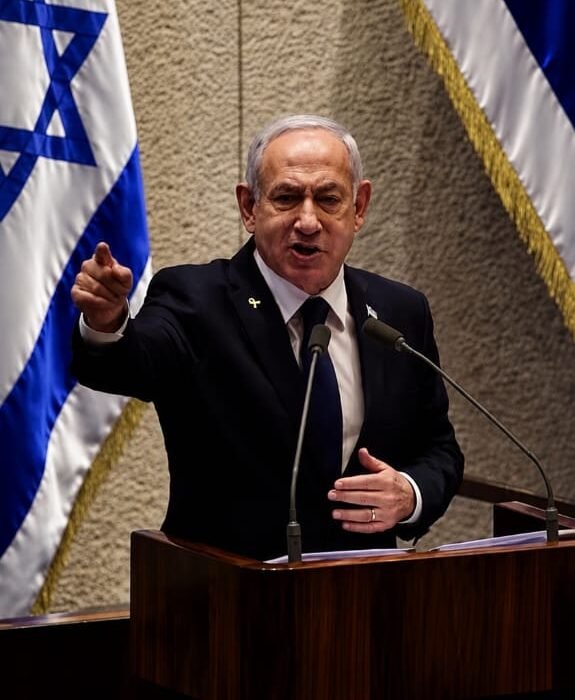
Jerusalem/Washington — Israeli Prime Minister Benjamin Netanyahu has declared that any attempt to arrest him under an International Criminal Court (ICC) warrant, while travelling abroad could spark a major diplomatic and security confrontation, as he continues to reject the court’s authority and enjoys renewed backing from the United States.
Speaking in an interview with Fox News host Sean Hannity during his visit to the United States, Netanyahu said extensive security arrangements have been put in place to counter any effort to enforce the ICC warrant against him.
Responding to questions about the possibility of an emergency landing in a country that recognises the ICC and could seek to detain him, the Israeli leader said he travels with elite security personnel and Special Forces contingents prepared to respond to any such situation.
The remarks come amid escalating international debate over the ICC’s move to pursue legal action against Netanyahu and other senior Israeli officials over the conduct of the war in Gaza.
While member states of the Rome Statute are expected to cooperate with the court, experts note that enforcing an arrest warrant against a sitting Israeli prime minister would pose significant political, diplomatic and security challenges.
Netanyahu’s comments underscore Israel’s continued rejection of the court’s jurisdiction, as Israeli authorities maintain that, the ICC lacks legal authority over the country and insist that the proceedings are politically motivated.
The issue has generated sharp divisions across the international community, with supporters of the court arguing that international law must be upheld, while critics contend that the ICC has unfairly singled out Israel.
The controversy has also revived memories of previous political confrontations surrounding international legal actions against Israeli leaders.
In the United States and several Western countries, demonstrations and political campaigns linked to the Gaza conflict have intensified public debate over the role of international institutions in addressing wartime conduct.
Netanyahu’s defiant position comes shortly after a high-profile meeting at the White House with United States President Donald Trump, where both leaders discussed regional security, the Middle East peace process and strategic cooperation.
The meeting was widely interpreted as a strong signal of Washington’s continued support for Israel despite mounting international scrutiny of the Gaza conflict and the ICC proceedings.
Trump has repeatedly criticised the court’s actions against Israeli officials and reaffirmed America’s commitment to Israel’s security interests.
The renewed show of solidarity between Washington and Jerusalem has strengthened Netanyahu’s position at a time when Israel faces growing diplomatic pressure from some countries over the war in Gaza.
As legal and political battles over the ICC warrant continue, Netanyahu’s latest remarks are expected to intensify global debate over the reach of international law, national sovereignty and the practical challenges of enforcing judicial decisions against serving world leaders.