
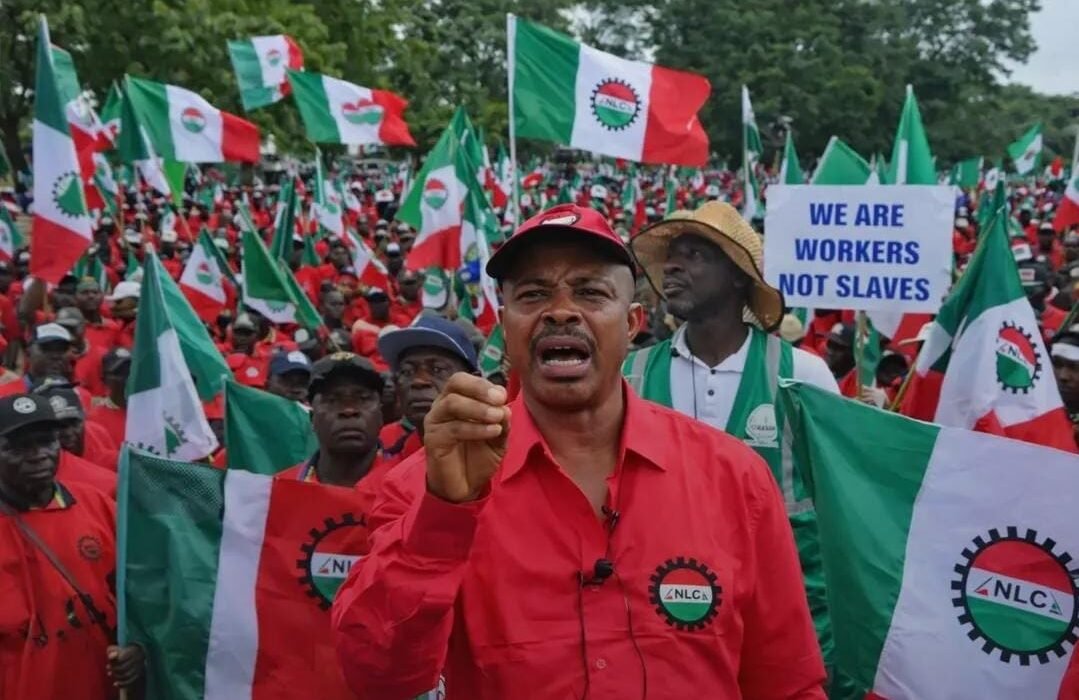
Organised labour in Nigeria is set to decide on its next line of action following a crucial meeting with the Federal Government scheduled for today, as the Nigeria Labour Congress, NLC, and the Trade Union Congress, TUC, continue to press for concrete and actionable proposals on petrol pricing, wage adjustments and other unresolved workers’ welfare issues.
The meeting, which is expected to hold in Abuja, comes against the backdrop of growing tension and anxiety across the country, following the threat by the two labour centres to embark on a nationwide industrial action if their demands are not met by the government.
The NLC and TUC had, in a joint statement issued last week, accused the Federal Government of failing to implement several agreements reached during previous negotiations, particularly those relating to palliatives to cushion the effects of fuel subsidy removal and the review of workers’ wages.
According to the labour leaders, the current economic realities have made life unbearable for the average Nigerian worker, as the removal of subsidy on Premium Motor Spirit, PMS, has led to a astronomical increase in the cost of transportation, food, housing and other essential commodities.
They stated that workers can no longer cope with the present minimum wage, which has been eroded by inflation and the continuous depreciation of the naira, and therefore demanded an immediate commencement of a new national minimum wage negotiation and a reduction in the pump price of petrol.
The labour centres also demanded that the Federal Government should put in place a comprehensive and transparent palliative distribution mechanism to ensure that the relief materials reach the most vulnerable Nigerians, rather than being diverted by politicians and middlemen.
Other demands by organised labour include the reversal of the recent increase in school fees in federal institutions, reduction in VAT, provision of Compressed Natural Gas, CNG, buses for mass transit, and the rehabilitation of the nation’s four refineries to reduce dependence on imported fuel.
Ahead of today’s meeting, there has been palpable tension across the country, as many Nigerians fear that failure to reach an amicable resolution could lead to a total shutdown of the economy, with far-reaching consequences for businesses and households.
In Akwa Ibom State, residents who spoke on the development expressed mixed feelings of hope and anxiety, as they await the outcome of the crucial engagement between the government and labour leaders.
Speaking in Uyo, the state capital, a social commentator and public affairs analyst, Mr. Godwin James, said the Federal Government has no choice but to address the legitimate demands of organised labour, as those demands reflect the true picture of the economic hardship facing ordinary Nigerians.
James noted that since the removal of fuel subsidy in May, the cost of living has skyrocketed beyond the reach of many families, with many workers spending over 60 percent of their monthly income on transportation alone.
He explained that many small businesses have collapsed, many families can no longer afford three square meals a day, and many children have dropped out of school because their parents can no longer afford school fees and other expenses.
According to him, the demands by labour are not selfish or politically motivated, but are aimed at ensuring that Nigerian workers live a dignified life and that the economy does not collapse completely.
He stressed that the Federal Government must show sincerity, empathy and commitment at today’s meeting by presenting concrete, time-bound proposals rather than empty promises and endless committees that have characterised past engagements.
James further urged the government to use the opportunity of the meeting to rebuild public trust, which he said has been eroded due to repeated failure to honour agreements with labour and other stakeholders.
He warned that if the government fails to meet the demands of labour and allows the strike to proceed, it would further worsen the already fragile economy and cause untold hardship for millions of Nigerians who depend on daily income.
Similarly, another resident, Mr. Sunday Frank, a civil servant in Uyo, described the demands by the NLC and TUC as reasonable, justifiable and long overdue, considering the current economic realities in the country.
Frank said as a civil servant, he knows firsthand what workers are going through, as salaries no longer take workers home, and many civil servants are heavily indebted due to the rising cost of living.
He said many workers now trek long distances to work, borrow money to feed their families and are unable to pay house rents, school fees and medical bills because of the high cost of living.
Frank expressed optimism that the Federal Government will respond positively and favourably to the demands of labour at today’s meeting, to avert the impending nationwide strike.
He noted that President Bola Ahmed Tinubu has shown willingness to engage with labour in the past, and expressed hope that this time, the engagement will yield concrete results.
According to him, a nationwide strike at this time would be very painful for everyone, including workers themselves, but that labour has been pushed to the wall and has no other option but to use strike as a last resort.
He therefore appealed to both parties to make concessions and reach a middle ground in the interest of the Nigerian people, especially the poor and vulnerable who would suffer the most if a strike is declared.
Both respondents who spoke with our correspondent expressed hope that today’s meeting will produce a positive outcome that will lead to the suspension of the planned strike and bring relief to workers and other Nigerians.
They also called on the Federal Government to be proactive in addressing workers’ welfare issues in the future, rather than waiting for threats of strike before taking action.
Meanwhile, the Nigeria Labour Congress has directed all its affiliate unions and state councils to remain on high alert and to mobilise members in readiness for any directive that may be issued after today’s meeting.
In a circular to all state councils, the NLC said it is prepared to shut down the country if the Federal Government fails to meet its demands, but that it remains open to dialogue and genuine negotiation.
Similarly, the Trade Union Congress said it is expecting the Federal Government to come to the table with concrete and implementable proposals, not mere rhetorics.
As Nigerians await the outcome of today’s meeting, many have expressed hope that wisdom will prevail and that both parties will place national interest above all other considerations, to avoid plunging the country into another round of economic paralysis.