

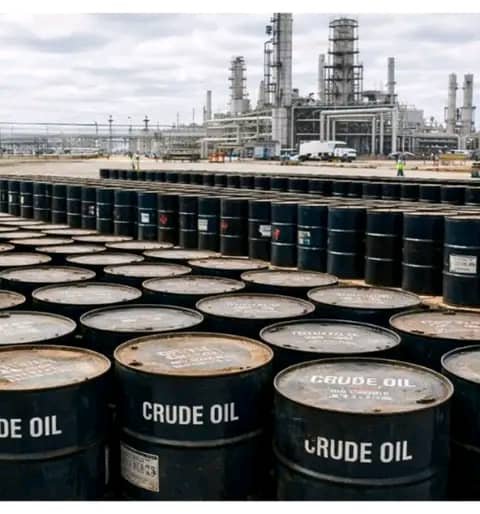
Nigeria’s crude oil production is coming under fresh pressure as output from the country’s aging oil assets continues to slide, raising new concerns about government revenue and foreign exchange inflows.
New data from the Nigerian Upstream Petroleum Regulatory Commission, NUPRC, shows that average production from five mature oil fields fell sharply in June 2026. Output dropped by 20.8 percent, from 13,794 barrels per day in the previous period to 10,930 barrels per day.
Mature fields account for a significant portion of Nigeria’s onshore and shallow-water production. The decline underscores a long-standing challenge in the industry, where reservoirs naturally deplete over time without consistent capital injection and technical intervention to maintain flow rates.
The drop comes at a sensitive time for the economy. Crude oil remains Nigeria’s biggest source of foreign exchange and a major contributor to federal revenue. Any sustained fall in output directly affects the government’s ability to fund the budget and stabilize the naira in the face of import pressures.
Industry experts say the trend highlights an urgent need for more investment in existing assets. They pointed to activities such as drilling of additional wells, well workovers, and the deployment of enhanced oil recovery techniques as critical steps to slow the decline and squeeze more barrels from current fields.
The experts also called for faster regulatory approvals from relevant agencies. They noted that delays in permits and project sign-offs often slow down intervention work, making it harder for operators to respond quickly to production challenges in mature terrains.
Beyond domestic revenue, the development has implications for Nigeria’s standing in the global oil market. With OPEC+ quotas and competition from other producers, Nigeria risks losing market share if it cannot stabilize output from fields that are already producing. That could weaken its bargaining position and reduce its contribution to global supply.
Analysts agree that reversing the decline will require a coordinated push between government, regulators, and oil companies. With crude prices still volatile, sustaining production from mature assets is seen as one of the fastest ways to protect government revenue, shore up foreign exchange earnings, and keep Nigeria competitive among oil-producing nations.
Oil company executives said funding remains a major hurdle, as many International Oil Companies have shifted focus to deep-water projects while divesting onshore assets. They argued that without tax incentives and clearer terms under the Petroleum Industry Act, it will be difficult to attract the capital needed for brownfield redevelopment. Some operators are already partnering with indigenous firms to share costs and technical expertise.
The NUPRC, however, said it is working on a mature field revitalization roadmap aimed at unlocking stranded barrels. According to the Commission, the plan includes fast-track approvals, improved data sharing, and incentives for enhanced oil recovery. Officials stressed that stabilizing output from existing fields is central to Nigeria’s target of sustaining 2 million barrels per day and meeting both domestic obligations and export commitments.