

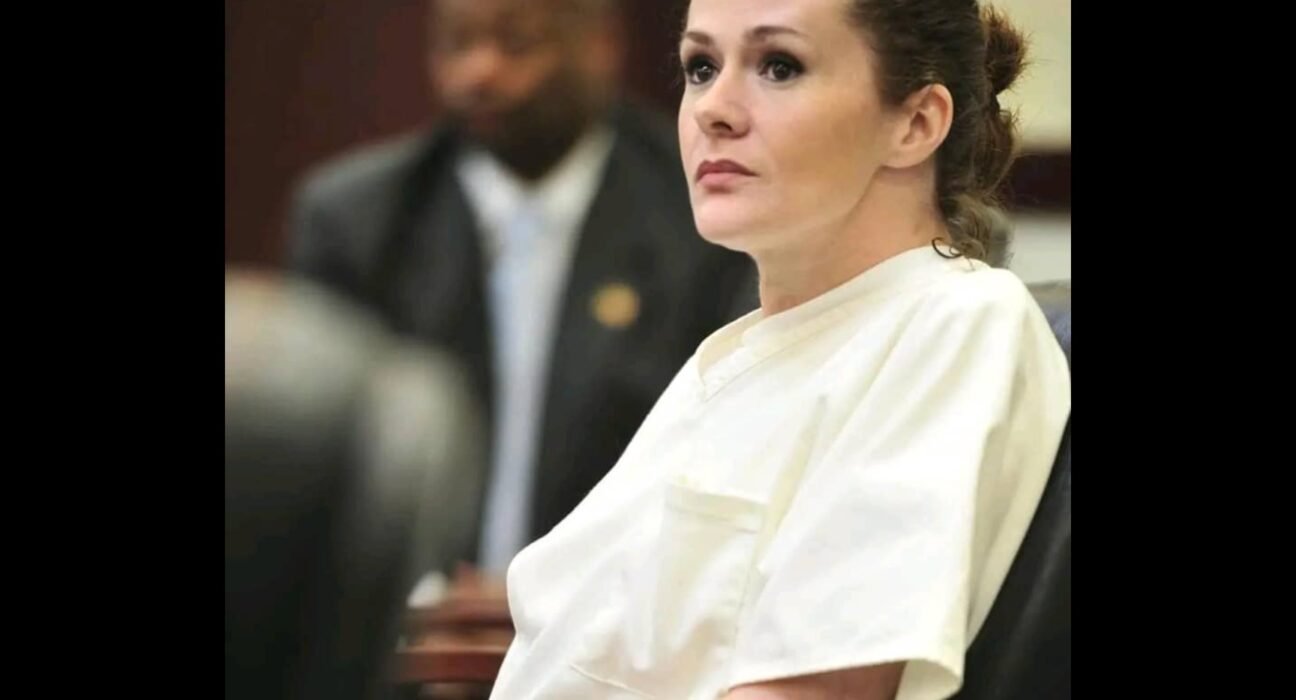
A death row inmate in Tennessee, United States, Christa Pike, is currently unconscious and on a ventilator in a hospital after an attempt to execute her by lethal injection failed to result in her death.
Her lawyers disclosed her present condition yesterday, two days after prison officials at the Riverbend Maximum Security Institution in Nashville attempted to carry out the execution using two doses of the drug pentobarbital, a powerful sedative commonly used in lethal injection protocols.
The 50-year-old inmate, who has spent decades on death row, was rushed to a hospital in the Nashville area following the botched procedure, where she is said to be receiving intensive medical treatment for the effects of the drug and for injuries sustained during the execution attempt.
According to her legal representatives, Stephen Ferrell and Luke Ihnen, Pike remains in critical condition, unconscious and dependent on a ventilator to breathe, as doctors battle to stabilise her and manage the complications arising from the high doses of pentobarbital administered.
The lawyers also revealed that Pike sustained significant injuries to both arms during the failed execution process, injuries which they said are consistent with repeated and forceful attempts to gain intravenous access in order to administer the lethal drugs.
They described the situation as deeply distressing and unprecedented in recent times in Tennessee, noting that their client was subjected to a prolonged and painful procedure that ultimately failed, leaving her in a life-threatening condition rather than resulting in the intended execution.
Following the incident, Ferrell and Ihnen have filed an emergency motion before a court in Nashville, seeking an order directing the Tennessee Department of Correction to preserve all evidence relating to the execution attempt, including medical records, video footage and documentation of the procedure.
The emergency motion, they said, is necessary to ensure that crucial evidence is not destroyed, altered or tampered with, and to allow for a thorough and independent investigation into what went wrong during the execution and whether established protocols were followed.
Pike had been scheduled to be executed on Wednesday at the Riverbend Maximum Security Institution in Nashville, in what would have been the first execution of a woman in Tennessee in recent years, having been convicted for a crime committed when she was a teenager.
Her case has attracted national and international attention over the years, not only because she is one of the few women on death row in Tennessee but also because of questions raised by human rights groups and legal experts about her age at the time of the offence and her mental health history.
The attempted execution on Wednesday was carried out behind closed doors at the maximum security prison, with prison officials reportedly administering two separate doses of pentobarbital after the first dose failed to cause death, a move that has now come under intense scrutiny.
Sources familiar with the execution protocol said that pentobarbital is expected to cause rapid unconsciousness and eventual death when administered in high doses, but in Pike’s case, the drug did not have the intended effect, leading to complications that forced officials to halt the process and seek emergency medical intervention.
The Tennessee Department of Correction has yet to issue a detailed public statement explaining what went wrong during the procedure, how many attempts were made to establish intravenous lines and why two doses of the drug were administered without success.
Human rights advocates and opponents of capital punishment have seized on the incident to renew calls for a halt to executions in Tennessee and across the United States, arguing that the failed attempt constitutes cruel and unusual punishment prohibited by the Constitution.
They argue that the physical and psychological trauma inflicted on Pike as a result of the botched execution amounts to torture and that no further attempt should be made to execute her, especially given her current medical condition and the injuries she sustained.
Legal experts also note that the incident could have far-reaching implications for the future of lethal injection as a method of execution in Tennessee, as it raises serious questions about the competence of execution teams, the quality of drugs used and the adequacy of existing safeguards.
Pike’s lawyers have indicated that they will be pursuing all available legal remedies to ensure accountability, to protect their client’s rights and to prevent the state from making another attempt to execute her while she remains incapacitated and under medical care.
They have also called for an independent investigation into the execution attempt, including a review of the training and qualifications of the personnel involved, the source and potency of the drugs used and whether the state violated its own execution protocols and procedures.
As Pike remains unconscious and on a ventilator in a Nashville hospital, the focus has now shifted from her scheduled execution to her chances of survival and recovery, with medical personnel reportedly working around the clock to stabilise her condition.
The case has once again brought to the forefront the contentious debate over capital punishment in the United States, with many Nigerians and international observers following developments closely and questioning whether the method of lethal injection can ever be considered humane and foolproof.