
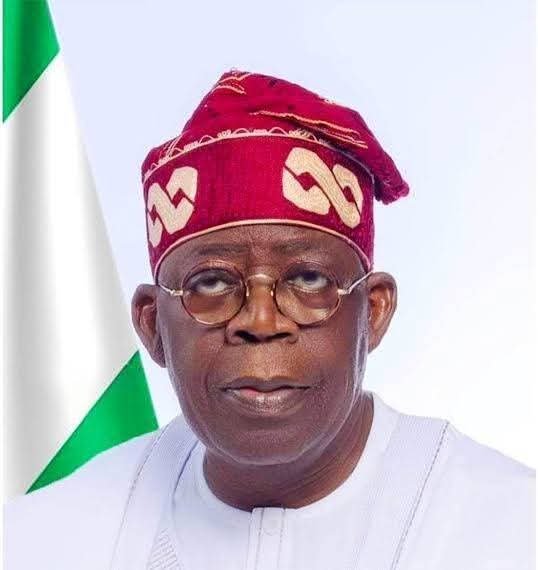
ABUJA – President Bola Ahmed Tinubu has declared that Nigeria has overcome the worst phase of its economic crisis and is now firmly on the path of recovery, growth, and national renewal, following what he described as “difficult but necessary” reforms undertaken by his administration over the past three years.
Speaking on Thursday in a nationwide address marking the third anniversary of his administration, President Tinubu acknowledged the severe economic hardship experienced by Nigerians but maintained that the sacrifices made by citizens were not in vain.
The President’s speech was made available through a statement posted on the X handle of his Special Adviser on Information and Strategy, Bayo Onanuga.
Tinubu said his administration inherited a nation burdened by mounting fiscal pressures, unsustainable fuel subsidies, exchange-rate distortions, rising debt-servicing costs, insecurity, and declining public confidence in government institutions.
According to him, Nigeria was spending about ₦18.4 billion daily on petrol subsidies, amounting to over ₦4 trillion in 2022 alone, while multiple foreign exchange windows and arbitrage practices reportedly cost the nation more than ₦8 trillion within three years.
“The situation demanded urgent and courageous action. Difficult but necessary decisions had to be taken to stabilise the economy and prevent a deeper national crisis,” Tinubu stated.
Defending the removal of fuel subsidy and foreign exchange reforms, the President said failure to act would have pushed Nigeria toward fiscal collapse, worsening poverty, and economic uncertainty.
“Together, we chose reform over ruin and decisiveness over hesitation. We chose long-term national recovery over short-term comfort,” he added.
Tinubu, however, admitted that the reforms triggered rising living costs and placed enormous pressure on families, workers, and businesses across the country.
Despite the hardship, the President expressed optimism that the economy was gradually rebounding, citing improvements in public finances, increased investor confidence, and a significant rise in the Nigerian stock market.
According to him, the Nigerian Exchange All Share Index rose from 53,000 points in 2023 to 250,000 points in 2026, while market capitalisation increased from ₦30 trillion to ₦160 trillion.
The President also highlighted ongoing infrastructure projects across the federation, including the Lagos-Calabar Coastal Highway, Sokoto-Badagry Super Highway, Abuja-Kaduna-Zaria-Kano Road, and rehabilitation of the East-West Road.
He disclosed that over 2,700 kilometres of highways and major roads are currently under construction, reconstruction, or rehabilitation nationwide.
On energy reforms, Tinubu said his administration had attracted billions of dollars in fresh investments into the oil and gas sector, while domestic refining capacity was improving through operational large-scale and modular refineries.
He further noted that the $5 billion NLNG Train 7 project was nearing completion and would boost Nigeria’s LNG production capacity and exports.
Addressing the power sector challenges, Tinubu said the Federal Government was clearing legacy debts, expanding transmission infrastructure, investing in renewable energy, and strengthening the national grid to support industrial growth.
The President also outlined achievements recorded in agriculture, housing, healthcare, education, and digital economy development.
He revealed that over 1.5 million Nigerian students had benefited from the Nigerian Education Loan Fund with more than ₦282 billion disbursed so far.
Tinubu added that the Renewed Hope Housing Programme and the Federal Housing Authority were delivering over 10,000 housing units across 14 states and the FCT, while generating more than 300,000 jobs.
In the telecommunications sector, the President said renewed investor confidence was driving network expansion, digital access, and job creation across the country.
He also reassured Nigerians that security remained a top priority of his administration, noting that military and security agencies had intensified operations against terrorists, bandits, kidnappers, and oil thieves.
“Many communities and highways are becoming safer and more economically active,” Tinubu said, while assuring citizens that government would continue investing in intelligence, logistics, surveillance technology, and inter-agency coordination.
Calling for unity and national cohesion, the President urged Nigerians to reject division, cynicism and embrace collective sacrifice for nation-building.
“Nigeria belongs to all of us and no region, faith, or group should feel marginalised or forgotten. Our diversity is a source of strength,” he declared.
Tinubu expressed confidence that Nigeria would emerge stronger and more prosperous despite present challenges.
“History tests nations before it elevates them. Nigeria is passing through such a test. But I believe with all my heart that we shall emerge stronger, fairer, more united, and more prosperous than ever before,” the President stated.