

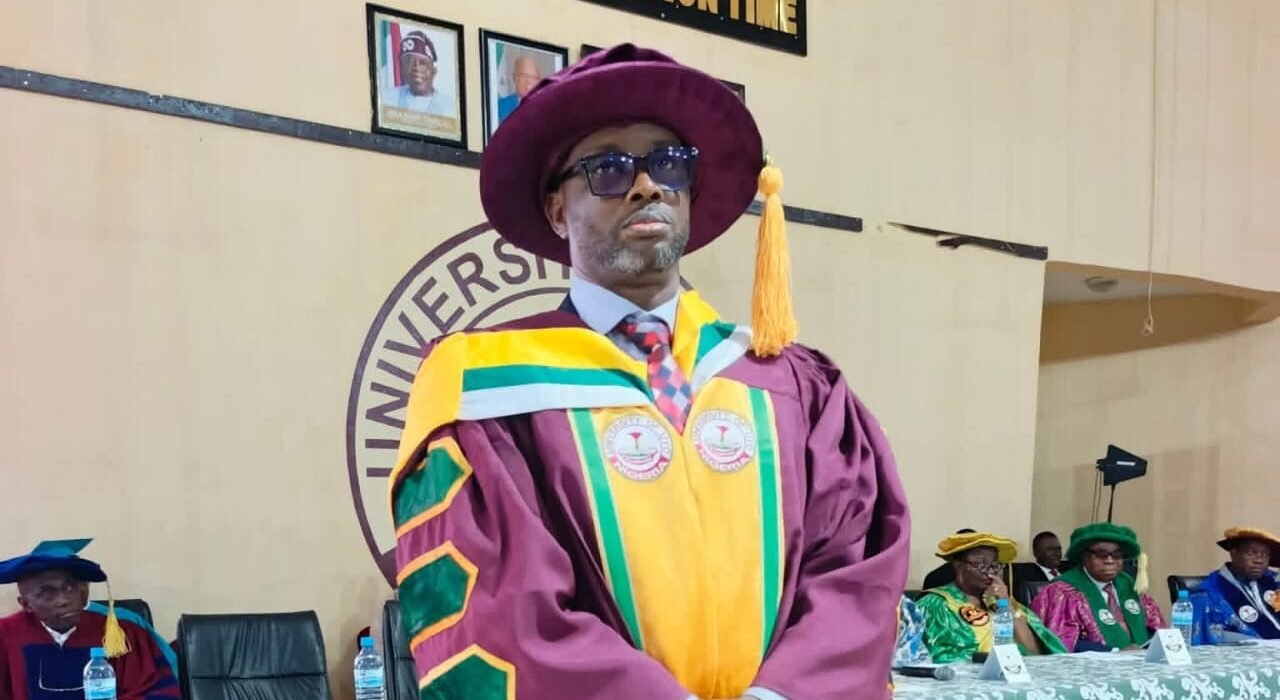
UYO – A Professor of Industrial Sociology at the University of Uyo, Prof. Aniefiok Ukommi, has attributed the worsening plight of Nigerian workers to persistent economic underperformance, poor educational planning, unemployment, workplace stress, and weak labour protection systems.
Delivering the 138th Inaugural Lecture of the University of Uyo at the weekend titled, “That It May Be Well with Nigerian Workers: My Contributions to Industrial Sociology,” Prof. Ukommi argued that the welfare of workers remains the bedrock of economic growth and sustainable national development.
The professor lamented that despite Nigeria’s abundant natural and human resources, millions of citizens continue to grapple with poverty, unemployment and low wages, describing the situation as a paradox of “poverty amidst plenty” warning that, national prosperity would remain elusive unless urgent reforms are implemented.
According to him, the country’s economic challenges have created a growing population of “working poor” individuals, who are employed but still unable to meet basic living standards due to low incomes and limited opportunities.
He traced many of the nation’s labour market problems to a mismatch between educational outcomes and industry needs, stressing that Nigeria’s education system has historically focused more on producing civil servants than fostering innovation, entrepreneurship and technological advancement.
“Had Nigeria strategically linked education with technology and skills development from the outset, the current gaps between labour market demands and workers’ competencies would have been significantly reduced,” he said.
Prof. Ukommi also identified workplace stress as a major challenge confronting Nigerian workers, particularly in universities and other public institutions, where heavy workloads, inadequate staffing and poor working conditions continue to affect productivity and employee wellbeing.
He noted that studies conducted by him and other researchers revealed that excluding workers from target-setting processes often increases workplace pressure, reduces motivation and negatively impacts organisational performance.
The inaugural lecturer further expressed concern over the growing trend of downsizing and retrenchment in both public and private organisations, warning that while such measures may reduce operational costs, they often leave workers traumatised and create wider socio-economic consequences.
On retirement, he observed that corruption, poor pension management and inflation have left many retirees financially vulnerable, urging workers to embrace legitimate investment opportunities while still in active service.
Addressing labour relations, Prof. Ukommi underscored the importance of trade unions in protecting workers’ rights, promoting collective bargaining and improving workplace conditions, while calling for stronger collaboration between employers and labour organisations.
The sociologist also highlighted the prevalence of gender-based violence against women and girls in Nigeria, noting that harmful cultural practices, ignorance and institutional failures continue to fuel abuse across social, religious and ethnic divides.
To improve workers’ welfare and stimulate economic growth, he recommended economic stabilisation measures that would create decent jobs and fair wages, reforms to align education with technology-driven skills, improved staffing and stress-management policies in workplaces, stronger labour unions, and equitable distribution of national resources.
Prof. Ukommi pledged to continue mentoring young scholars, advancing research in Industrial Sociology, and supporting postgraduate students through a research grant initiative aimed at strengthening scholarship in labour and industrial relations.
He concluded that Nigeria’s future prosperity depends largely on its ability to protect, motivate and empower workers, insisting that “the wellbeing of Nigerian workers is the foundation of national prosperity.”