
A resident of Uyo, the Akwa Ibom State capital, Mrs. Ginnifer Bassey, has called on government at all levels to put in place stronger and more effective measures to end the practice of child marriage in the country, particularly among families battling financial hardship.
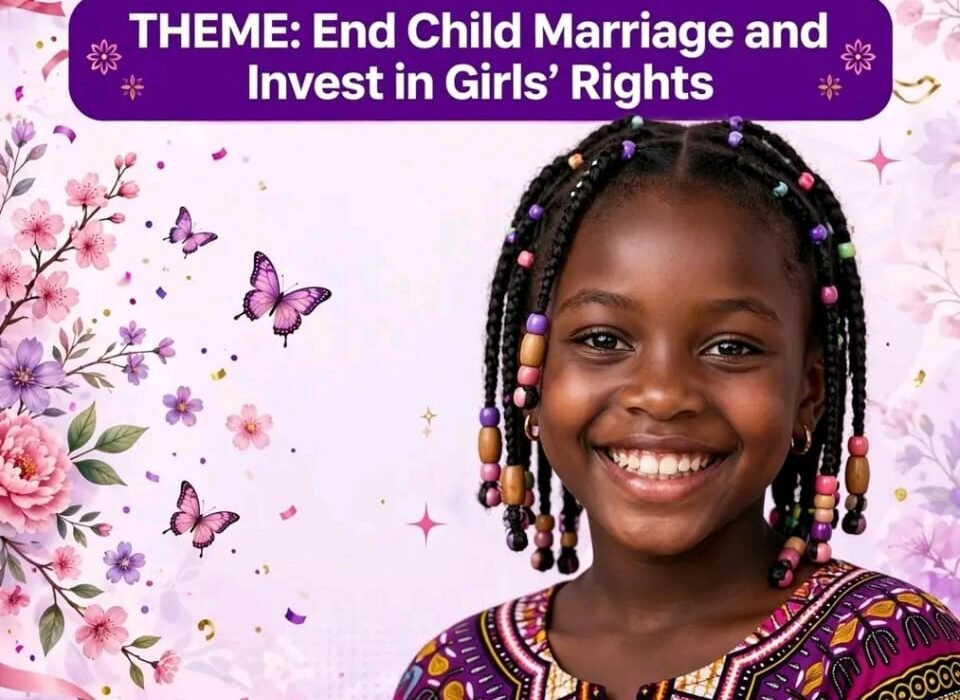
Mrs. Bassey made the call while speaking with Newsmen in Uyo on Sunday, a day after the global observance of the International Day of the Girl Child, which is celebrated annually to draw attention to the rights, challenges and potential of the girl child.
She said the commemoration of the International Day of the Girl Child serves as a timely reminder of the need for society to recognise, respect and protect the fundamental rights and inherent potential of every girl child in the country.
According to her, every girl child, irrespective of her family background, socio-economic status or location, deserves the opportunity to grow, learn and achieve her dreams without being subjected to harmful traditional practices that could truncate her future.
Bassey expressed concern that despite increased awareness campaigns and advocacy against child marriage, the practice still persists in some communities, with many young girls being forced into early marriages at an age when they should still be in school.
She identified poverty as one of the major drivers of child marriage, noting that economic hardship often pushes some parents to marry off their daughters early as a means of reducing financial burden on the family or for economic gains.
She explained that in some cases, families facing severe economic difficulties see early marriage as a coping mechanism, believing that marrying off their daughters will bring financial relief or reduce the number of mouths to feed in the household.
The Uyo-based resident, however, stressed that such decisions have far-reaching negative consequences on the lives of the affected girls, as it deprives them of their childhood, education, health and opportunity to realise their full potential in life.
Bassey therefore urged the government to take proactive and deliberate steps to address the economic challenges and poverty levels that make young girls vulnerable to child marriage and other forms of exploitation.
She said government should come up with sustainable economic empowerment programmes targeted at vulnerable families, particularly women and low-income households, to reduce their economic desperation and dependence on child marriage as a survival strategy.
According to her, when parents are economically empowered and have access to stable means of livelihood, they will be less likely to succumb to pressure to marry off their daughters at an early age and will be able to prioritise their education.
Bassey also called for greater and more deliberate investment in girls’ education, noting that education remains the most powerful tool for protecting girls from early marriage and for equipping them with knowledge and skills to contribute meaningfully to national development.
She said when a girl is educated, she is better informed about her rights, more confident to speak against harmful practices and more likely to break the cycle of poverty that often perpetuates child marriage in families and communities.
She further advocated for improved access to quality healthcare services for girls, especially in rural and underserved communities, stressing that early marriage exposes young girls to serious health risks, including complications during childbirth and other reproductive health challenges.
Bassey noted that protecting the girl child requires a holistic approach that combines economic empowerment of families, quality education, accessible healthcare and strong legal frameworks that are effectively enforced.
She called on government agencies, non-governmental organisations, traditional rulers, religious leaders and other stakeholders to intensify sensitisation campaigns against child marriage and to educate parents on the long-term benefits of allowing their daughters to complete their education.
She also urged the government to strengthen existing laws prohibiting child marriage and to ensure that offenders are brought to book, adding that enforcement of the Child Rights Act and other protective laws is crucial to deterring the practice.
According to her, beyond enacting laws, there is need for consistent advocacy, community engagement and support systems that will encourage parents to value and invest in their daughters rather than seeing them as economic burdens.
Bassey emphasised that every girl child has the potential to become a doctor, lawyer, engineer, teacher or leader in her chosen field, if given the right environment, support and opportunity to develop her talents and pursue her aspirations.
She concluded by calling on all stakeholders to work together to create a society where every girl child is safe, educated, healthy and empowered to contribute meaningfully to the development of Akwa Ibom State and Nigeria as a whole.
She also appealed to parents and guardians to desist from using their daughters as a means of escaping poverty, noting that such short-term relief often leads to long-term regret, as many child brides end up facing domestic violence, school dropout and lifelong dependency.
Bassey commended organisations and individuals who have been at the forefront of championing the rights of the girl child in Akwa Ibom State, while urging the media to sustain advocacy on the dangers of child marriage and the importance of investing in girls.
She maintained that ending child marriage is not just a moral obligation but an economic necessity, as empowering girls to complete their education and pursue their careers will significantly boost productivity, reduce poverty and accelerate sustainable development across the state and the nation.