
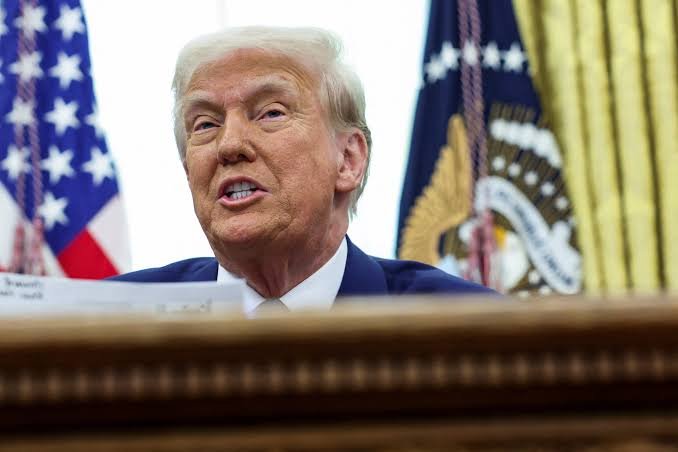
Nigeria’s economy is bracing for potential turmoil as United States President Donald Trump threatens to impose an additional 10% tariff on countries aligning with BRICS, a bloc of emerging economies. Nigeria, recently admitted as the ninth BRICS partner country in January 2025, could face significant economic strain if Trump follows through on his threat.
The proposed tariff hike comes as Nigeria’s economy struggles with high inflation rates, currently at 27.50%, and fluctuating growth rates, averaging 2.3% in the decade leading up to 2023. Over 90% of Nigeria’s exports to the US are crude oil and petroleum products, which might be somewhat shielded, but non-oil exports like fertilizers and agricultural goods could take a hit.
According to Dr. Jumoke Oduwole, Nigeria’s Minister of Trade and Investment, the tariff policy could undermine Nigeria’s trade competitiveness in the US market, particularly for non-oil products previously exempted under the African Growth and Opportunity Act (AGOA). Dele Alake, Nigeria’s Minister of Solid Minerals Development, sees an opportunity for Africa to refocus its economic strategies, adding value to raw materials before exporting them and strengthening intra-African trade.
The Nigerian government is reviewing potential scenarios and considering measures to mitigate any fallout. With Trump giving countries until August 1 to make “deals” or face unilateral trade penalties, Nigeria faces a critical foreign policy balancing act between seeking benefits from its BRICS partnership and maintaining strong bilateral ties with the US.
As President Bola Tinubu attends the 17th BRICS summit in Rio de Janeiro, Brazil, the Nigerian government is walking a tightrope, weighing the risks of geopolitical alignment with BRICS against its strong ties with the US, a major trading partner. The outcome of this delicate situation remains uncertain, with potential implications for Nigeria’s economic recovery and growth.