
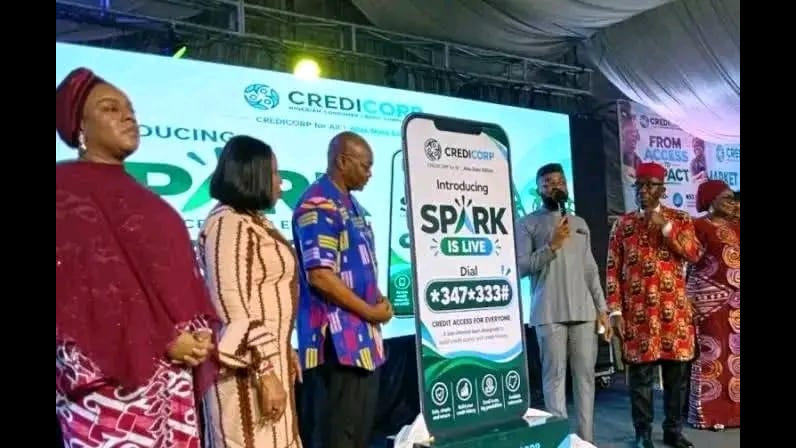
The Federal Government of Nigeria has introduced a new mobile phone service that will enable Nigerians to access loans and build their credit records without necessarily owning a smartphone or having internet connection, in a major move aimed at deepening financial inclusion across the country.
The innovative service, which is accessible through a simple Unstructured Supplementary Service Data, USSD, code, was introduced by the Nigerian Consumer Credit Corporation, CREDICORP, an agency established by the Federal Government to facilitate access to consumer credit for Nigerians and promote responsible borrowing.
According to verified reports available to our correspondent, the initiative was specifically designed to cater for first-time borrowers and individuals with little or no credit history, who have hitherto been excluded from the formal credit system due to lack of collateral, credit records and access to digital financial services.
The Corporation explained that the service will provide an easy, convenient and seamless platform for Nigerians, particularly those in rural and underserved communities, to obtain small-ticket loans for productive purposes while simultaneously building a verifiable and reliable credit history that can open doors to bigger financial opportunities in the future.
CREDICORP noted that the lack of credit history has been a major barrier for millions of Nigerians seeking to access loans from formal financial institutions, as many banks and lenders often require evidence of previous borrowing and repayment before granting new credit facilities to customers.
With the introduction of the new USSD service, Nigerians can now start their credit journey by accessing small loans through their basic feature phones, repaying them promptly, and thereby building a credible repayment record that will improve their creditworthiness and eligibility for larger loans subsequently.
The agency stated that the initiative is in line with President Bola Ahmed Tinubu’s Renewed Hope Agenda, which seeks to expand access to consumer credit for over 50 per cent of the economically active population, stimulate local manufacturing, reduce corruption and improve the quality of life of Nigerians.
According to the Corporation, the service is expected to become more widely available across the country before the end of 2026, with ongoing engagements with financial institutions, mobile network operators and other critical stakeholders to ensure its nationwide rollout and seamless operation.
CREDICORP further explained that the USSD platform is user-friendly, secure and accessible on all mobile networks in Nigeria, and does not require internet connectivity, smartphone or any form of sophisticated technology, making it ideal for low-income earners, artisans, traders, farmers and other informal sector operators.
The Corporation said the loans accessible through the platform will be provided at affordable interest rates and flexible repayment terms, to encourage responsible borrowing and ensure that beneficiaries do not fall into debt traps, while also promoting a culture of credit discipline among Nigerians.
Meanwhile, interested Nigerians who wish to benefit from the service can simply dial *347*333# on their mobile phones, regardless of the network they are using, and follow the on-screen prompts to register, check their credit eligibility and apply for loans.
Upon dialling the code, users will be required to provide some basic personal information and will be guided through a simple process that will enable them to access instant loans, receive information about their credit scores and monitor their repayment history.
The Corporation assured that adequate measures have been put in place to protect the privacy and data of users, and that the platform is equipped with robust security features to prevent fraud, unauthorized access and misuse of personal information.
Financial experts who spoke to our correspondent have hailed the introduction of the USSD loan service as a timely and laudable initiative that will go a long way in bridging the financial inclusion gap in Nigeria and empowering millions of citizens who have been excluded from the formal financial system.
They noted that many Nigerians, especially those in rural areas, still do not have access to smartphones and reliable internet connectivity, and therefore the provision of a USSD-based credit service is a practical and inclusive approach that will ensure that no one is left behind in the drive for financial inclusion.
The experts also observed that building a credit history is crucial for economic empowerment, as it enables individuals to access not only loans but also other financial services such as mortgages, business financing, asset acquisition and investment opportunities that can transform their lives and livelihoods.
They further urged the Federal Government and CREDICORP to ensure proper sensitization and awareness creation about the service, particularly in rural communities, so that the target beneficiaries can fully understand how it works and take advantage of it.
The experts also called on the government to put in place strong consumer protection mechanisms and effective monitoring systems to ensure that the loans are used for productive purposes and that borrowers are not exploited by unscrupulous lenders.
In the meantime, Nigerians have been advised to take advantage of the opportunity to build their credit records, as a good credit history will not only improve their chances of accessing more financial opportunities in the future but will also contribute to the overall growth and stability of the nation’s credit system.
The introduction of the *347*333# USSD code for loan access is expected to mark a new chapter in Nigeria’s quest for financial inclusion and economic empowerment, as it provides a simple, accessible and affordable pathway for millions of Nigerians to enter the formal credit market and improve their economic well-being.
As the service gradually becomes available nationwide, stakeholders have expressed optimism that it will stimulate economic activities, boost small businesses, create jobs and ultimately contribute to the realization of the Federal Government’s goal of building a $1 trillion economy.