
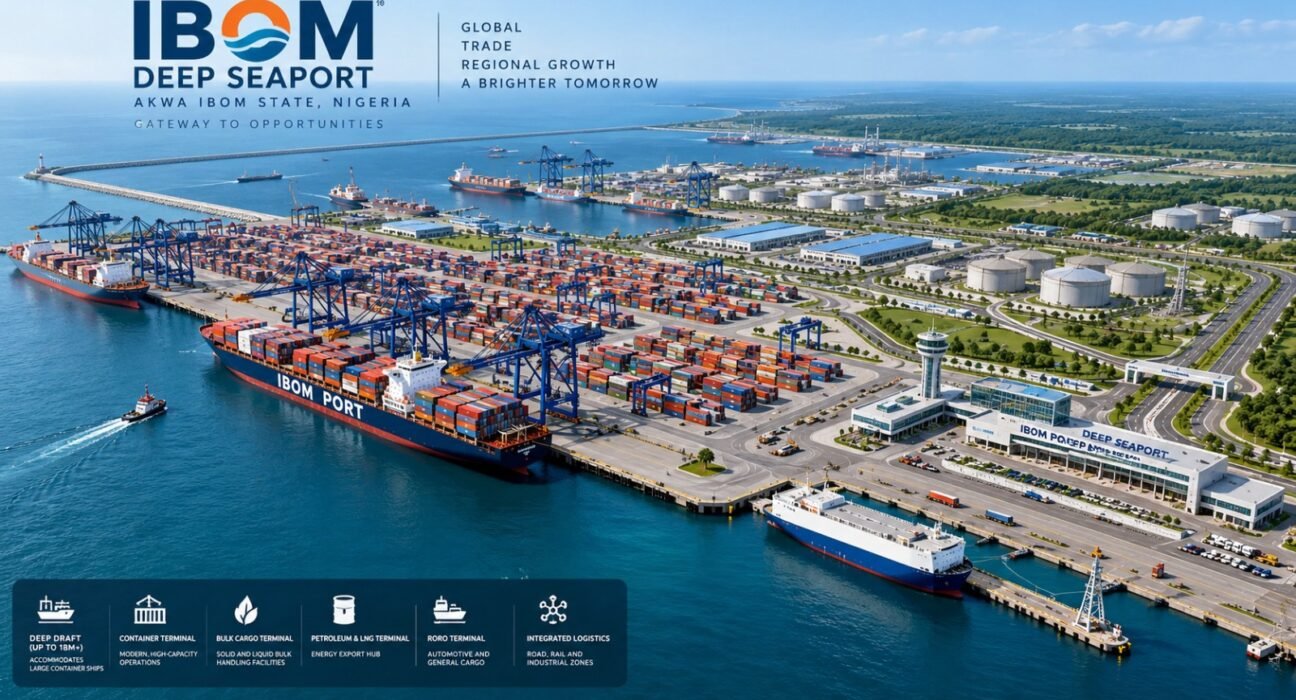
For decades, Akwa Ibom has tied much of its economic ambition to a single project: the Ibom Deep Seaport. On paper, the case is compelling. The state has a 129-kilometre coastline – the longest in Nigeria – and waters deep enough to compete with the country’s leading ports. The vision was never for a modest regional facility. The seaport was meant to ease pressure on the congested Lagos corridor and give Nigeria a second major gateway into the maritime economy.
Yet the federal government’s handling of the project has created a very different impression. Among local stakeholders and political observers, the long delay increasingly feels like the denial of a democratic dividend to a state that has contributed heavily to the national treasury for decades.
The contrast with Ogun State is difficult to ignore. Under President Bola Tinubu’s APC administration, the $7 billion Gateway Deep Seaport secured presidential support with remarkable speed: regulatory obstacles were cleared, and international logistics operators were personally courted in Paris. The Ibom Deep Seaport, meanwhile, remains stuck where it has been for years – caught in bureaucracy and sustained by assurances that have yet to become concrete action.
That disparity raises a difficult question about what federalism owes a state such as Akwa Ibom. Oil and gas revenues from the state have supported the national budget for generations, yet the infrastructure that could give it a genuine path toward economic independence has not followed.
Governor Umoh Eno has tried to move the project forward himself – meeting with the presidency, leading overseas delegations and searching for partners across continents. Even so, the state is still carrying most of the burden, including an estimated $2 billion cost for the first terminal phase alone.
Politics also hangs over the debate. Akwa Ibom has never been an APC stronghold, and some residents believe the prolonged delay is not accidental. To them, the seaport’s slow progress looks like a warning to a state that has refused to align politically, especially when projects of similar ambition in APC-friendly states appear to move more quickly. That motive may be disputed, but the consequence is harder to dismiss: the imbalance weakens public faith in cooperative federalism.
Democracy should mean that every part of the federation is treated according to its contribution and the strength of its case – not according to how it votes. Without meaningful federal backing for the Ibom Deep Seaport, Akwa Ibom risks losing its best opportunity to build an economy that can thrive beyond oil.
If the Tinubu administration is serious about its Renewed Hope agenda, it must look beyond the electoral map. Holding back one of the Niger Delta’s biggest revenue contributors will not strengthen Nigeria; it will only deepen the sense of marginalization the government says it wants to address.
Opinion : Guest Contributor